Crypto exchanges in Malaysia operate through five digital asset exchange operators registered by the Securities Commission Malaysia: HATA Digital, Luno Malaysia, MX Global, SINEGY DAX, and Kinetic DAX. Their Malaysian services provide regulated access to approved digital assets, but each operator has its own MYR funding methods, product interface, supported markets, and withdrawal process.
This guide explains the exchanges without ordering them. Start with the Malaysian entity, then check its ringgit rail, custody model, asset, and withdrawal network.
Malaysia’s exchange market is built around five registered DAX operators
The SC register of digital asset exchanges defines the local market perimeter. It lists five recognized market operators, while an international app that happens to load from Malaysia does not become a Malaysian registered DAX simply because residents can open its website.
| Registered DAX | Public MYR access | Product surface | Public custody or control signal |
|---|---|---|---|
| HATA Digital | FPX funding; Hata announced zero FPX fees from RM500 in February 2026 | Malaysian exchange and broker products; separate Hata Global account scope | Crypto-send lock with a 24-hour reactivation delay; public pages reviewed do not name a Malaysian custodian |
| Luno Malaysia | FPX and Touch ‘n Go eWallet deposits; bank withdrawal with a published RM0.10 charge | Instant Buy plus a larger set of MYR order-book markets | Customer assets described as held 1:1 and separate from company funds, with proof-of-reserves reporting and institutional custody providers |
| MX Global | Free bank transfer, RM0.70 individual FPX deposit, and RM0.10 MYR withdrawal | Five disclosed MYR markets: BTC, ETH, XRP, SOL, and WLD; 0% maker and 0.5% taker schedule | MYR wallet balance disclosed as residing in a segregated trustee account at a Malaysian bank |
| SINEGY DAX | Bank transfer and FPX are documented; current account instructions still need confirmation | Local spot venue with MYR and crypto withdrawals | SC client-asset rules apply, but the public homepage reviewed does not name a custodian |
| Kinetic DAX | Bank transfer and FPX into a custodian trust account; the bank changed to Maybank in February 2026 | KDX publishes a broad MYR order book and external crypto transfers | Homepage states that crypto deposits and funds are segregated, audited, and secured through a trusted custodian |
In its May 2026 DAX framework release, the SC reported RM17.14 billion in regulated DAX trading value during 2025, up 23% from RM13.93 billion in 2024. The total shows usage, not which asset, bank rail, or withdrawal network will work for one customer.
Luno Malaysia connects a retail wallet to an MYR exchange
Luno Malaysia combines Instant Buy with an MYR order book. Its Malaysian website identifies the local operator, while the current public schedule lists FPX and Touch ‘n Go eWallet deposits, a RM0.10 bank-withdrawal charge, and different pricing for Instant Buy and exchange orders.
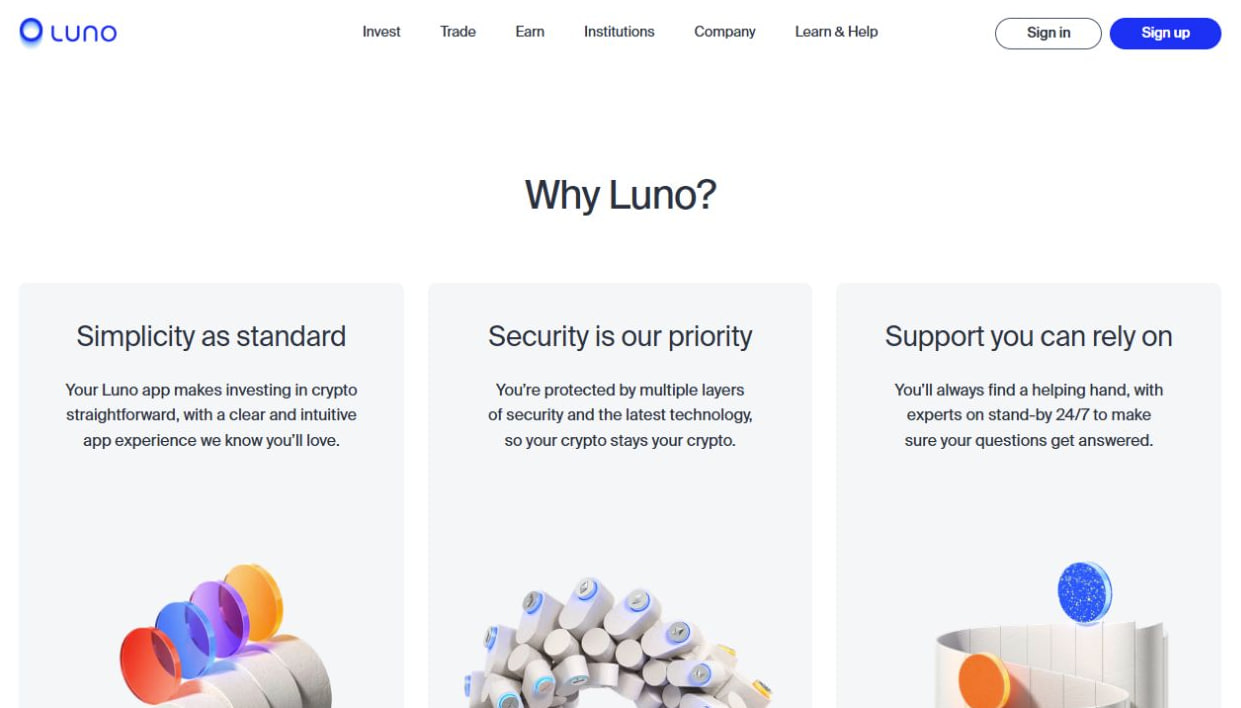
Ringgit must come from a same-name account and return to a verified Malaysian bank. Luno publicly describes customer assets as held 1:1 and separate from company funds, with proof-of-reserves reporting; that custody claim still does not remove transaction screening or withdrawal limits.
A discussion of Luno bank withdrawals reports successful transfers to several Malaysian banks, including five- and six-figure amounts. That supports a working MYR exit but does not promise another transfer will avoid source-of-funds review.
The compliance boundary is visible in a separate Luno account-closure discussion, where activity linked to a gambling service preceded account restrictions. The useful lesson is not that ordinary withdrawals are unsafe; it is that wallet provenance and the purpose of a transfer remain relevant even when the exchange itself is registered.
HATA Digital sits beside a separate Hata Global service
HATA Digital is the registered Malaysian operator, while the Hata public website also presents a global service regulated through a different jurisdiction. Hata announced free FPX deposits from RM500 in February 2026, but the funding promotion and Malaysian asset list should not be applied to a Hata Global account.
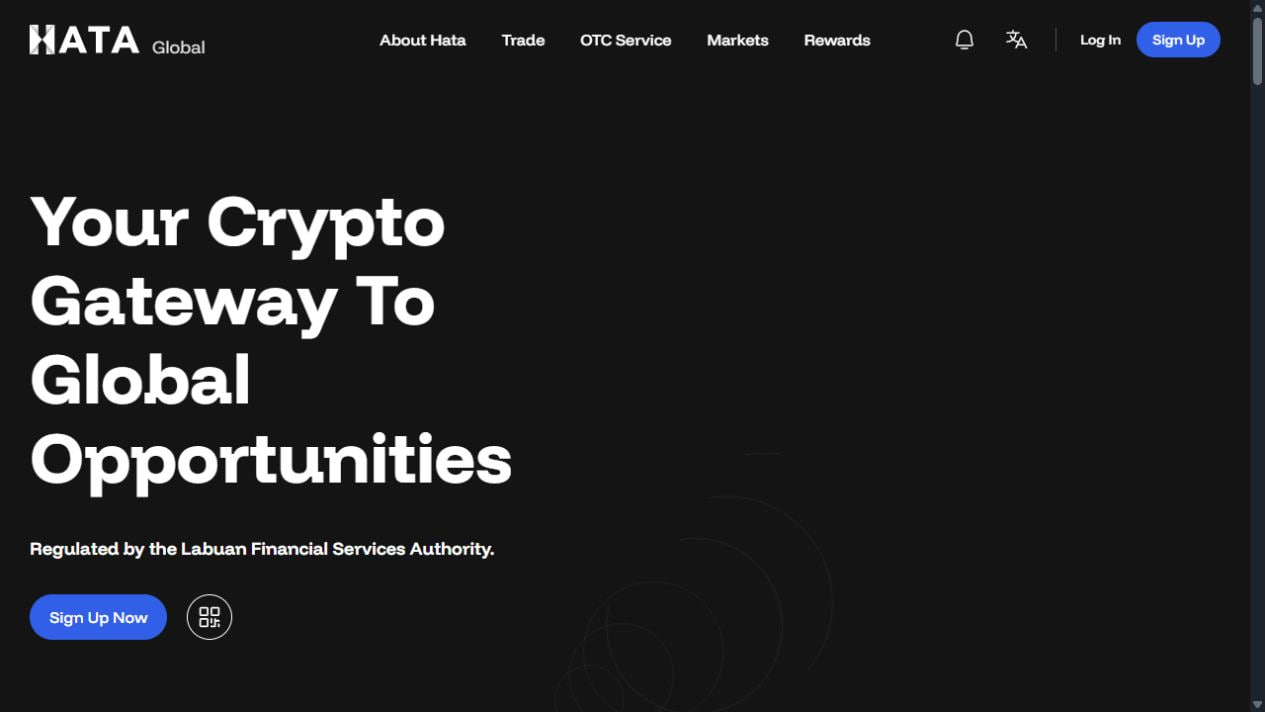
Hata also documents a crypto-withdrawal lock that can be disabled immediately and requires a 24-hour cooldown when re-enabled. A Malaysian discussion comparing Hata and Luno valued Hata’s bank withdrawal and recurring-purchase cost while reporting thinner trading liquidity.
In a separate USDT-to-MYR discussion, participants described using Hata Global, converting into a locally supported asset, handing off between entities, and cashing out in Malaysia. Every extra step adds cost or failure risk, so price the complete path.
MX Global provides a ringgit-focused local exchange route
MX Global publishes one of the clearest local schedules. Its MYR product page lists free bank-transfer deposits, RM0.70 individual FPX deposits, RM0.10 cash-out, and five MYR markets covering BTC, ETH, XRP, SOL, and WLD.
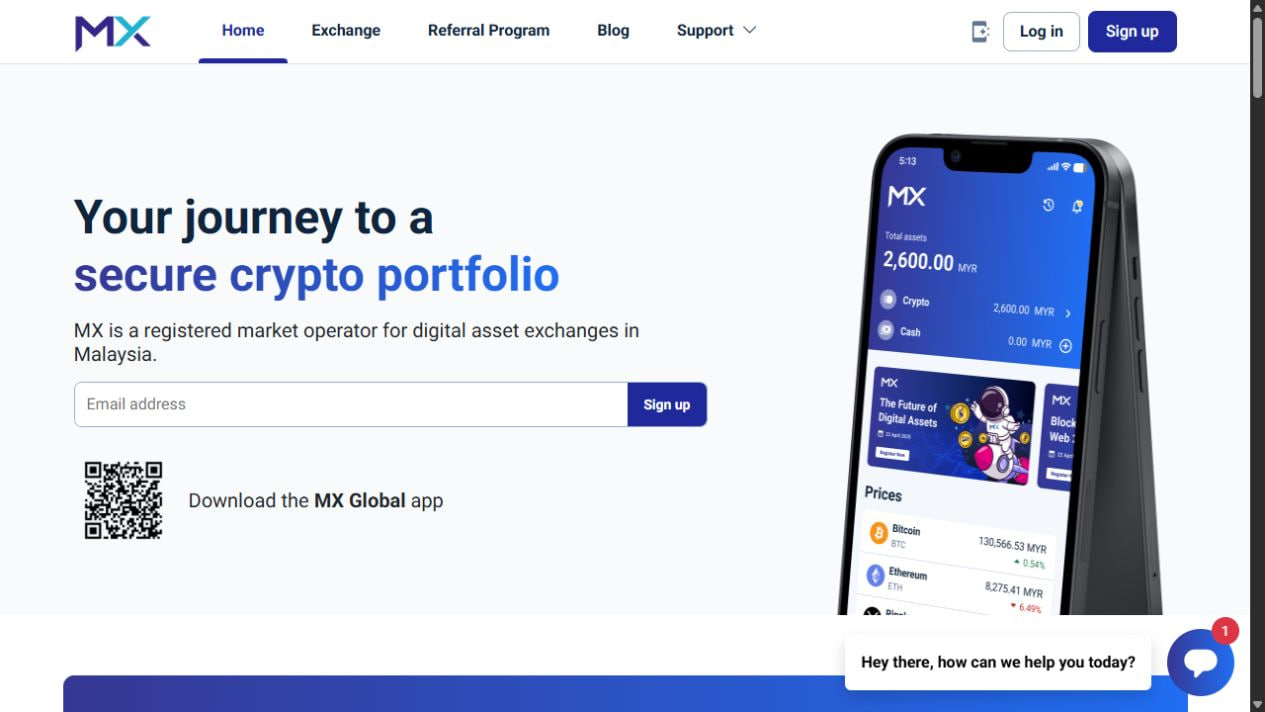
The same schedule shows 0% maker and 0.5% taker fees and states that MYR wallet balances sit in a segregated trustee account at a domestic bank. Customers still need to match the asset and network when transferring crypto, while a bank payout must return to an eligible Malaysian account.
One participant in a February 2026 Malaysian exchange discussion described slow withdrawals, limited asset variety, and less favorable MX spreads. This is not a platform-wide measurement, but it makes a live quote and small crypto and MYR withdrawals sensible before regular use.
SINEGY remains part of the regulated market from Penang
SINEGY is a Penang-based registered DAX and remains one of the five operators on the SC list. Its role is easy to overlook because it has a smaller public footprint than some consumer-facing brands, yet its regulatory status places it inside the same Malaysian perimeter rather than in the offshore category.
SINEGY’s current public fee information identifies bank transfer and FPX as MYR funding routes, alongside MYR and crypto withdrawals. Its homepage does not prominently identify the digital-asset custodian, so the article does not infer one; custody terms and live pairs should be confirmed in the account before funding.
The same Malaysian platform discussion described SINEGY as improving after earlier friction around instant-deposit fees. That comment does not verify the current fee schedule, but it shows why a dated account quote is more useful than carrying an old cost assumption into 2026.
Kinetic DAX carries the former Tokenize Malaysia operation into KDX
Kinetic DAX, branded as KDX, is the successor to Tokenize Technology (M) and appears under its current legal name on the SC register. The KDX website presents bank and FPX funding, an MYR order book, external crypto transfers, and its relationship with Malaysian financial group Kenanga.
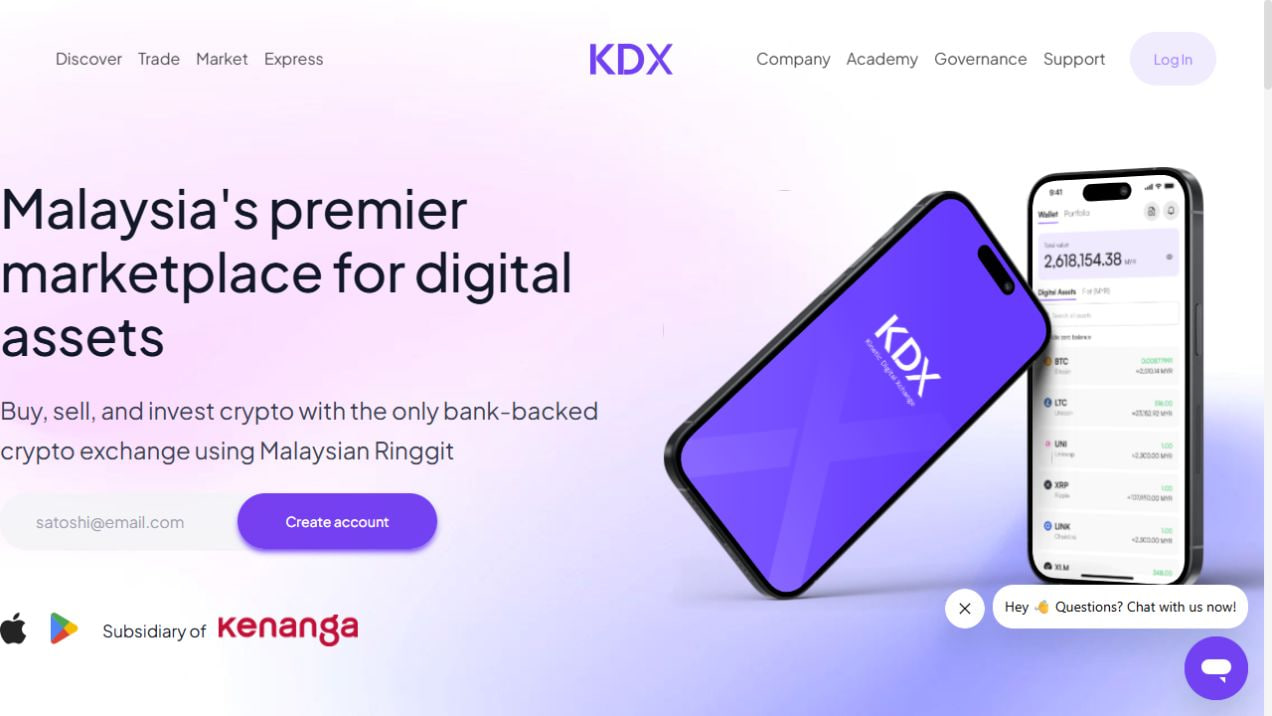
KDX says crypto deposits and customer funds are segregated, audited, and secured through a trusted custodian. Its custodian trust bank changed to Maybank in February 2026, so returning Tokenize users should replace saved deposit details and recheck whitelisted addresses before moving funds.
Comments in the February 2026 exchange thread treated KDX as an active local option whose spread could differ from Luno at a given moment. A separate community discussion of the KDX rebrand shows that users still connect the product with Tokenize. Neither thread replaces a funded test, but together they explain why current identity and current execution should be verified in the same session.
MYR access follows a complete account-to-bank lifecycle
A Malaysian exchange route begins with a verified account and a same-name funding source, not merely a MYR label on a market page. The user then chooses between a quoted retail purchase and an order-book trade, holds or withdraws the asset, and eventually sells back into ringgit for a bank payout.
Each stage can change the delivered result. Deposit limits, spread, trading fee, network fee, minimum withdrawal, bank processing, and compliance review all belong to the same route. KanalCoin’s guide to exchange liquidity and slippage in Southeast Asia explains why the visible quote should be tested at the customer’s actual order size rather than inferred from reported volume.
Malaysia’s bank-linked structure also differs from neighboring markets. Indonesia’s IDR onramp and withdrawal routes operate under a different regulator and tax framework, while Vietnam’s VND bank, P2P, and stablecoin routes require their own local-access checks. A rail that works in one country cannot be assumed to exist under the same brand in another.
Approved assets and Shariah status are separate from exchange availability
The SC’s digital assets directory identifies assets approved for trading and records Shariah status where applicable. Approval places an asset within the Malaysian regulatory framework; it does not mean every registered DAX lists that asset, offers the same MYR pair, or supports deposits and withdrawals over every blockchain network.
The distinction became more explicit in 2026. From March 30, a DAX seeking to offer a digital currency as Shariah-compliant must obtain endorsement from its Shariah adviser and submit that endorsement to the SC. Customers using the classification should therefore check the current asset entry and the exchange’s current market rather than relying on an older article or a global coin list.
A complete asset check records the exact ticker, Malaysian operator, MYR market, deposit network, withdrawal network, minimum amount, and custody status. Similar names and wrapped versions are not interchangeable, and sending through an unsupported network can turn a valid investment decision into a recovery problem.
The 2026 framework changes operator obligations and user recourse
The revised recognized-market guidelines took effect on May 20, 2026. They are designed to let registered DAXs introduce approved products more efficiently while strengthening the operator requirements that support governance, financial resilience, custody, and customer protection.
| 2026 framework change | Operational meaning | What a customer should observe |
|---|---|---|
| Streamlined product introduction | Registered operators can bring eligible assets to market under the revised process | A new listing still needs a live pair, deposit network, withdrawal route, and risk disclosure |
| Stronger financial and governance standards | The Malaysian operator must maintain appropriate resources and management controls | Legal entity, registration status, terms, and notices should identify the same service |
| Enhanced client-asset safeguards | Customer assets require clearer protection and operational controls | Custody terms, withdrawal status, incident notices, and account records should be accessible |
| FMOS membership during 2026 | Disputes can move into a formal Malaysian resolution channel when eligible | The customer should preserve statements, tickets, bank receipts, addresses, and transaction IDs |
| Enforcement against unregistered operators | Offshore availability and promotion do not confer Malaysian DAX status | Registration claims should be checked against the SC list, not an app-store listing or influencer post |
These measures strengthen the regulated perimeter without removing market or operational risk. Regulation defines operator obligations and recourse; it does not guarantee returns, instant payouts, or recovery from an incorrectly addressed transfer.
Exchange custody remains different from direct wallet control
Custody disclosure differs across the five operators. Luno says customer assets are held 1:1 and separately from company funds; MX discloses a segregated trustee account for MYR; KDX says customer crypto and funds are segregated and audited through a trusted custodian. These are public control statements, not deposit insurance or a guarantee against account review.
Hata publicly documents a withdrawal lock, while the SINEGY homepage reviewed does not prominently name its custodian. Limited public detail does not prove missing safeguards, but it gives the customer a reason to read the current custody terms and test withdrawal controls before leaving a material balance.
Direct wallet control replaces exchange dependency with seed backup, device security, and network responsibility. KanalCoin’s guide to wallet keys and self-custody covers that transition; a small withdrawal should confirm the network, address, and permissions before a larger transfer.
Offshore access does not extend the Malaysian DAX perimeter
An offshore exchange may offer more assets, derivatives, or global liquidity, but those features do not make its account equivalent to one operated by a Malaysian registered DAX. The customer may face a different legal entity, complaint process, custody arrangement, currency rail, and restriction on direct MYR settlement.
Some users trade crypto offshore and use a local DAX for the final ringgit conversion. That route adds transfer fees, network and address checks, source screening, and another custody handoff, all of which belong in the total cost.
Stablecoin settlement introduces the same boundary for merchants. A business considering crypto and stablecoin payments must separate receiving an onchain asset from converting it through an eligible Malaysian account, recording the transaction, and paying out ringgit. Exchange access solves only part of that operating flow.
Malaysia now has a clearer regulated exchange perimeter
Malaysia’s five registered DAX operators provide identifiable local routes into digital assets, but they are not interchangeable copies of one service. Luno Malaysia, HATA Digital, MX Global, SINEGY DAX, and Kinetic DAX each need to be understood through the legal entity, available MYR rail, live asset market, custody terms, and withdrawal path attached to the customer’s account.
The safest practical approach is to verify the operator on the SC register, complete identity checks, fund a small amount from a same-name account, record the delivered price, and test the intended exit. That process turns a general claim about Malaysian exchange access into evidence that the actual bank-to-asset-to-bank route works.
Frequently asked questions
How many crypto exchanges are registered in Malaysia in 2026?
The Securities Commission Malaysia lists five registered DAX operators: HATA Digital, Luno Malaysia, MX Global, SINEGY DAX, and Kinetic DAX. The register should be checked again before opening or funding an account because operator status can change.
Can Malaysian residents use an offshore crypto exchange?
Technical access to an offshore platform is not the same as using a Malaysian registered DAX. The offshore account may fall under another legal entity and may not provide a direct MYR bank route or the same Malaysian complaint and customer-protection framework.
How do MYR deposits and withdrawals work on a Malaysian DAX?
The customer normally completes verification, funds from a bank account in the same name, buys or sells a supported asset, and withdraws ringgit to a verified Malaysian bank account. Available methods, limits, processing times, and reviews vary by operator and account.
Does DAX registration mean customers control their private keys?
No. Registration governs the operator, but assets held inside an exchange account remain within its custody system unless withdrawn to a wallet controlled by the customer. Direct control begins only after a valid onchain withdrawal to an address whose keys the customer holds.
Disclaimer: This article is for informational and editorial purposes only and does not constitute legal, tax, or financial advice. Terms, fees, supported countries, and onboarding requirements can change and should be confirmed with each provider before integration.