

Crypto exchanges in Singapore operate within the Monetary Authority of Singapore’s digital payment token perimeter, but a licence belongs to a specific legal entity and set of payment activities. It does not automatically cover every app, exchange, wallet, derivative, custody product, or overseas affiliate carrying the same brand.
For a retail account, the practical starting point depends on the job. Coinbase connects a straightforward retail account to PayNow and FAST, Coinhako focuses on a familiar local SGD route, Crypto.com spans several linked products, OKX emphasizes advanced spot execution, and Independent Reserve extends into business and OTC access. None is the default winner for every route.
The MAS directory is broader than a list of retail exchanges
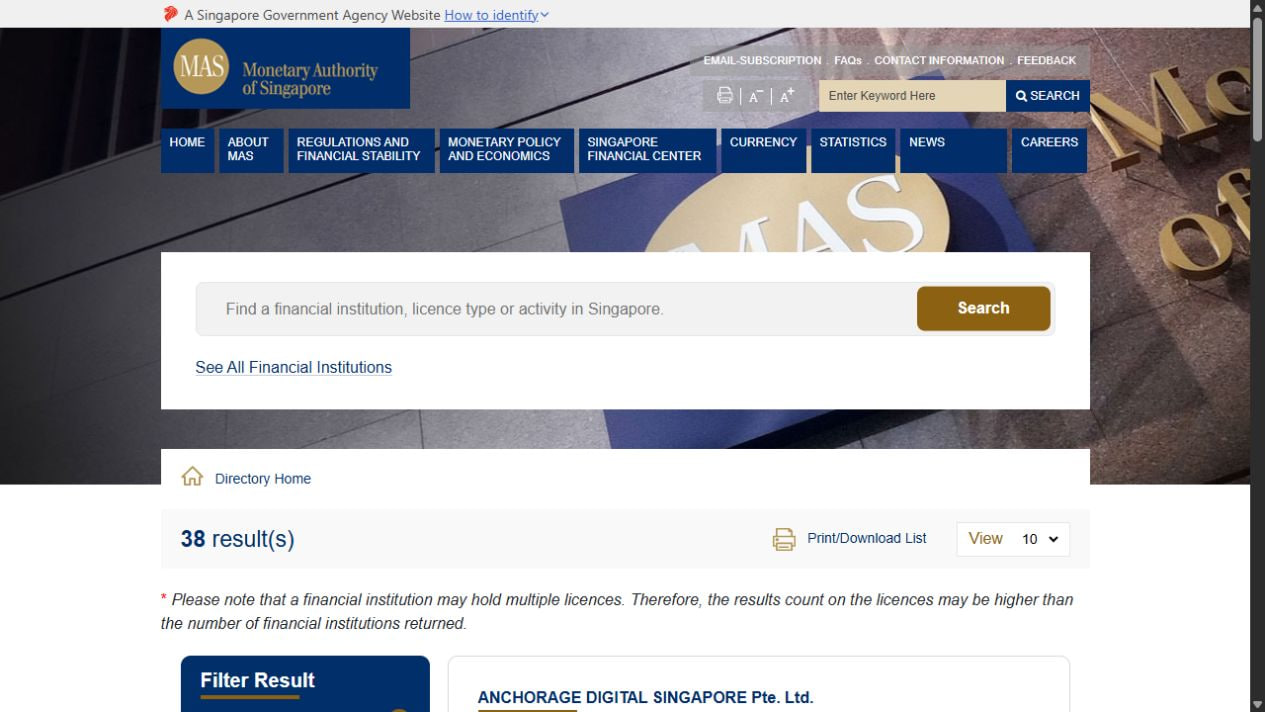
The MAS Financial Institutions Directory returned 38 DPT-service results when last updated in August 2026. That population includes retail platforms, institutional liquidity providers, custodians, payment companies, brokerages, and businesses whose customer journey may not resemble a consumer exchange account.
These five examples expose a public Singapore retail or business route, an identifiable local entity, and SGD access. The selection is not the complete MAS register; institutional-only venues, payment companies, custodians, and services without a comparable public account journey fall outside the scope.
| Retail route | Singapore entity and MAS position | SGD access, visible cost, and product boundary |
|---|---|---|
| Coinbase | Coinbase Singapore Pte. Ltd.; Major Payment Institution with DPT activity | PayNow and FAST deposits are advertised as free. Coinbase Advanced advertises maker fees as low as 0.0%, but the account tier and order preview set the actual rate; Prime custody is separate from retail trading. |
| Coinhako | Hako Technology Pte. Ltd., trading as Coinhako; Major Payment Institution with DPT activity | Public rates show 0.6% for spot trades and 0.5% for limit orders. SGD funding and withdrawal are local, while some listed assets remain trade-only. |
| Crypto.com | Foris DAX Asia Pte. Ltd.; licensed DPT provider | FAST deposits are free. Exchange rates reach 0.08% maker and 0.18% taker, while App spread, card, Onchain Wallet, and institutional custody remain separate. |
| Independent Reserve | Independent Reserve SG Pte. Ltd.; Major Payment Institution with DPT activity | PayNow is free; FAST deposits below S$1,000 cost S$2.50; trading falls from 0.5% to 0.02% with volume. Business, API, and OTC workflows differ from retail. |
| OKX | OKX SG Pte. Ltd.; Major Payment Institution with DPT activity | PayNow deposits and FAST withdrawals are advertised as free. The regular retail spot schedule starts at 0.10% maker and 0.20% taker; SGD, stablecoin, accredited-investor, and Wallet products have separate treatment. |
The figures were checked on public Singapore pages in August 2026, not through funded trades. Fees and enabled features can still change by account tier, asset, order type, network, and review status. The directory identifies the regulated entity; the account agreement and enabled product define the actual customer route.
Coinbase Singapore joins PayNow funding to a retail trading account
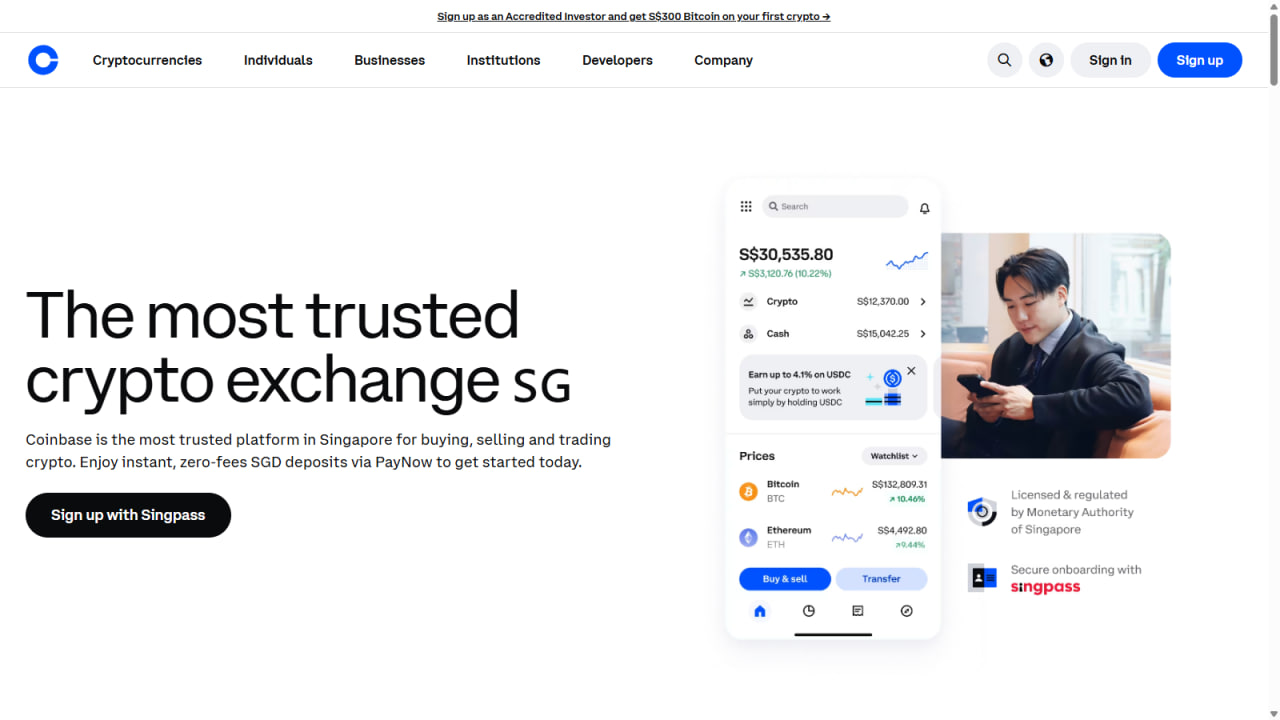
Coinbase Singapore presents a local retail route built around Singpass onboarding and zero-fee SGD deposits through PayNow or FAST. Its Singapore product page also advertises XSGD access, but the existence of an SGD-denominated stablecoin does not make every conversion, network, or cash-out free.
Funding begins with a bank account matched to the verified customer. The final result depends on retail quote versus order book, trading fee, asset, and withdrawal network. Cash-out should return to the verified bank rather than an assumed PayNow destination.
A Coinbase Singapore cash-out discussion described a successful FAST withdrawal that ultimately appeared in a PayLah-linked destination. The experience confirms that the rail can work while showing why the receiving account should be identified from the transaction record, not inferred from the FAST label.
Deposit reliability is not established by one successful transfer. A separate PayNow deposit report described an expected credit that did not appear, while a rejected withdrawal account report showed that a previously used bank relationship may still require another verification step. Both cases support a small two-way test before a larger trade.
Coinhako combines a Singapore retail interface with local cash-out
Coinhako is operated by Hako Technology and has served Singapore retail customers through a locally recognisable account and SGD route. Its public website should be read together with the MAS entity record because brand history alone does not define the current licensed activities or asset-transfer rules.
The platform can function as a bank-linked purchase and cash-out account without behaving like an advanced order-book venue for every user. Spread, transaction fee, final SGD received, and external-transfer availability need separate checks. A coin displayed for buying and selling may still be trade-only, which prevents it from serving as a direct route to self-custody.
A detailed Coinhako withdrawal discussion contains reports of smooth SGD transfers to DBS, POSB, and UOB. The same conversation raises wider spreads, limited trading tools, trade-only assets, and additional identity checks around some crypto withdrawals, making it useful evidence for both the bank route and its limits.
Coinhako’s security page refers to MAS technology-risk and security requirements. Those controls matter, but they do not answer whether a particular balance can leave over the intended blockchain. A small asset withdrawal remains the practical test for address controls, identity review, network support, and the final amount received.
Crypto.com separates the retail app, exchange, wallet, and custody service
Crypto.com presents the widest product family of the three examples. Its Singapore retail page advertises SGD trading, FAST funding, Singpass onboarding, and hundreds of crypto assets, while the App, Exchange, DeFi Wallet, card, and institutional custody service remain operationally distinct.
SGD can enter through the App, then move to the Exchange for order-book execution. Cash-out reverses that route through a stablecoin or SGD balance before FAST withdrawal. Each handoff changes the fee, spread, and transaction record.
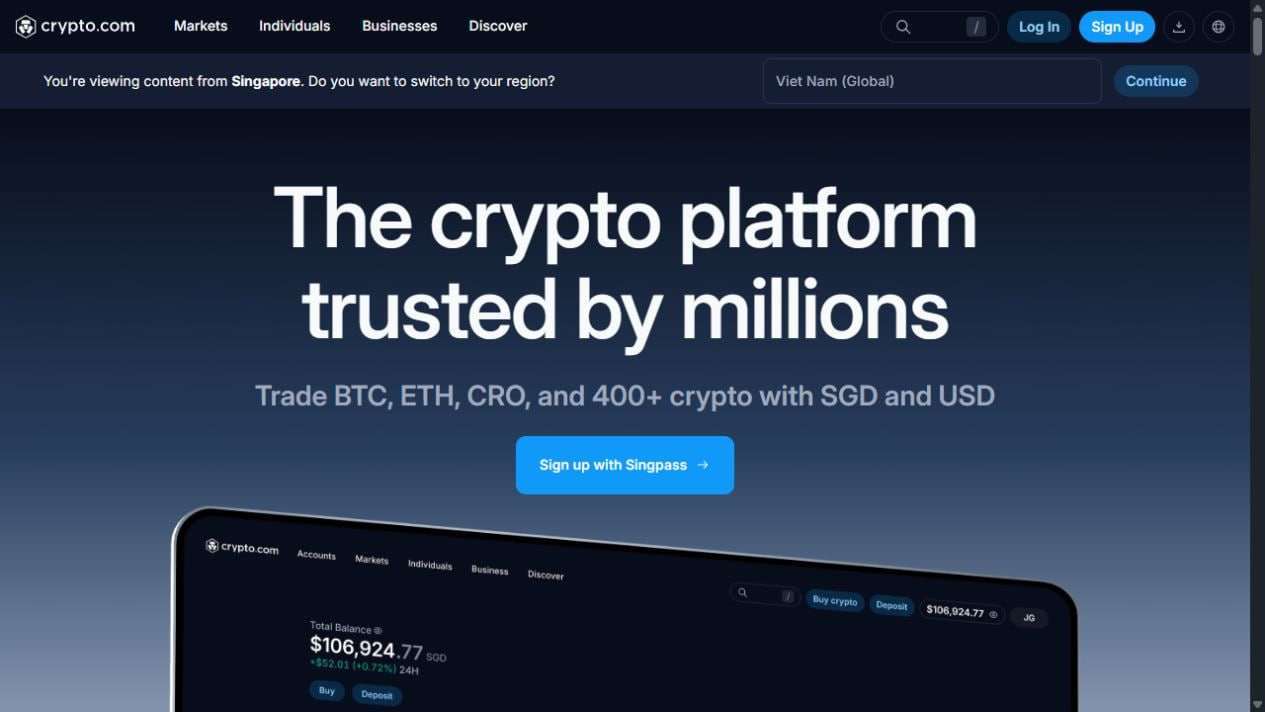
A discussion of Crypto.com SGD spreads described a material difference between the displayed crypto value and an App-based SGD sale. Participants reduced the gap by executing on the Exchange, moving USDC to the App, converting to SGD, and then using FAST. The account does not prove a permanent saving, but it identifies every conversion that needs pricing.
Another Singapore workflow discussion described quick FAST deposits and near-instant transfers between the Exchange and App while still identifying a separate SGD withdrawal charge. Current terms should be checked in the account because a fast internal transfer does not establish the final conversion rate or bank receipt.
Crypto.com’s security disclosure says retail customer assets are backed 1:1 and supported by proof-of-reserves controls. Its separate Singapore custody service describes segregated vaults and MPC controls under Foris DAX SG, an entity whose disclosed regulatory position differs from the licensed retail DPT provider. Institutional custody claims should therefore not be copied onto an App balance.
Independent Reserve connects retail SGD markets with business and OTC access
Independent Reserve combines SGD and USD order books with personal accounts, business onboarding, API access, and an OTC desk. Its Singapore fee schedule makes the route measurable, while the platform states that customer assets are held 1:1, segregated, and not lent or rehypothecated.
The retail route provides named SGD order books, while the business and OTC surfaces address different transactions. Onboarding, settlement, permissions, reporting, and the party holding the balance can differ.
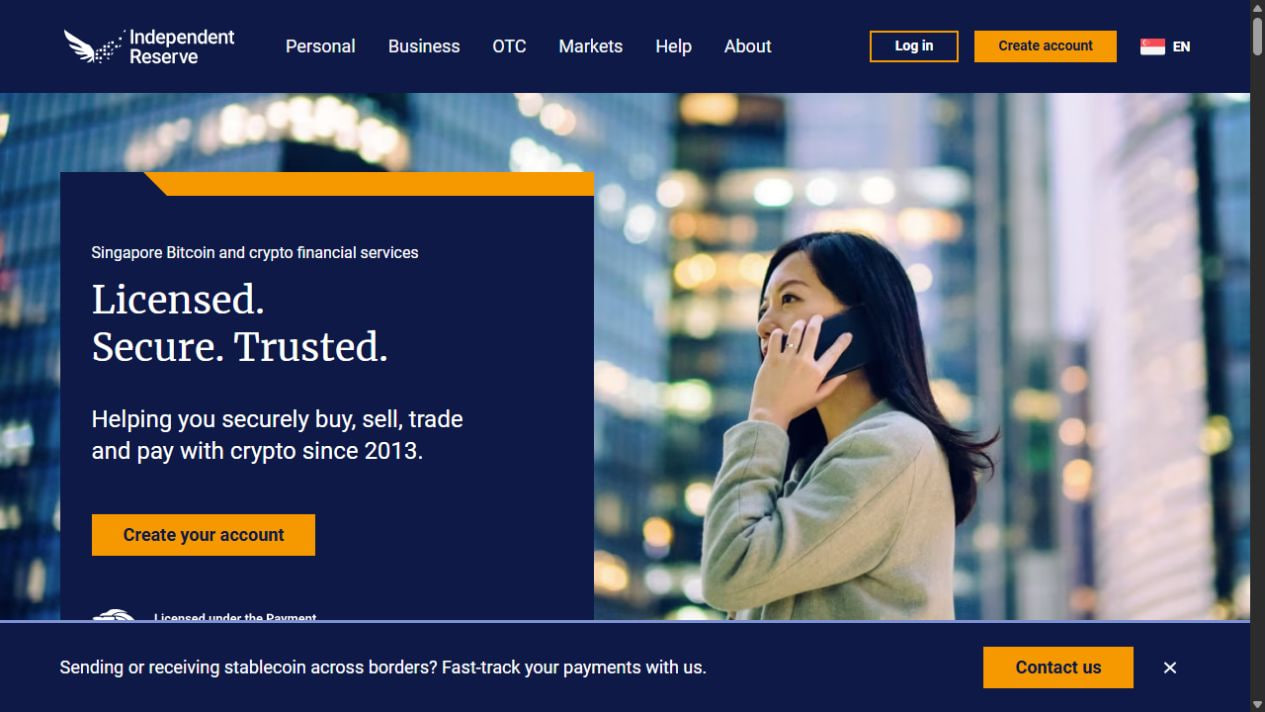
A Singapore bank-withdrawal case involving Independent Reserve records that distinction in practice. Earlier DBS withdrawals had completed smoothly, but one later request became unavailable and required support; the follow-up says the funds arrived after about two working days. This does not establish a normal settlement time, but it shows why instant FAST eligibility and manual review must be checked separately.
OKX Singapore pairs local payment rails with advanced spot execution
OKX provides a Singapore-facing spot route with PayNow funding and FAST cash-out. Its local payment-rail announcement describes both as instant and free, but that statement does not make the Wallet, derivatives, accredited-investor products, or every global service part of the same licensed retail account.
The main fit is active spot execution with a local SGD route. Check the interface enabled after Singapore onboarding because global product pages can display features unavailable to the local retail account.
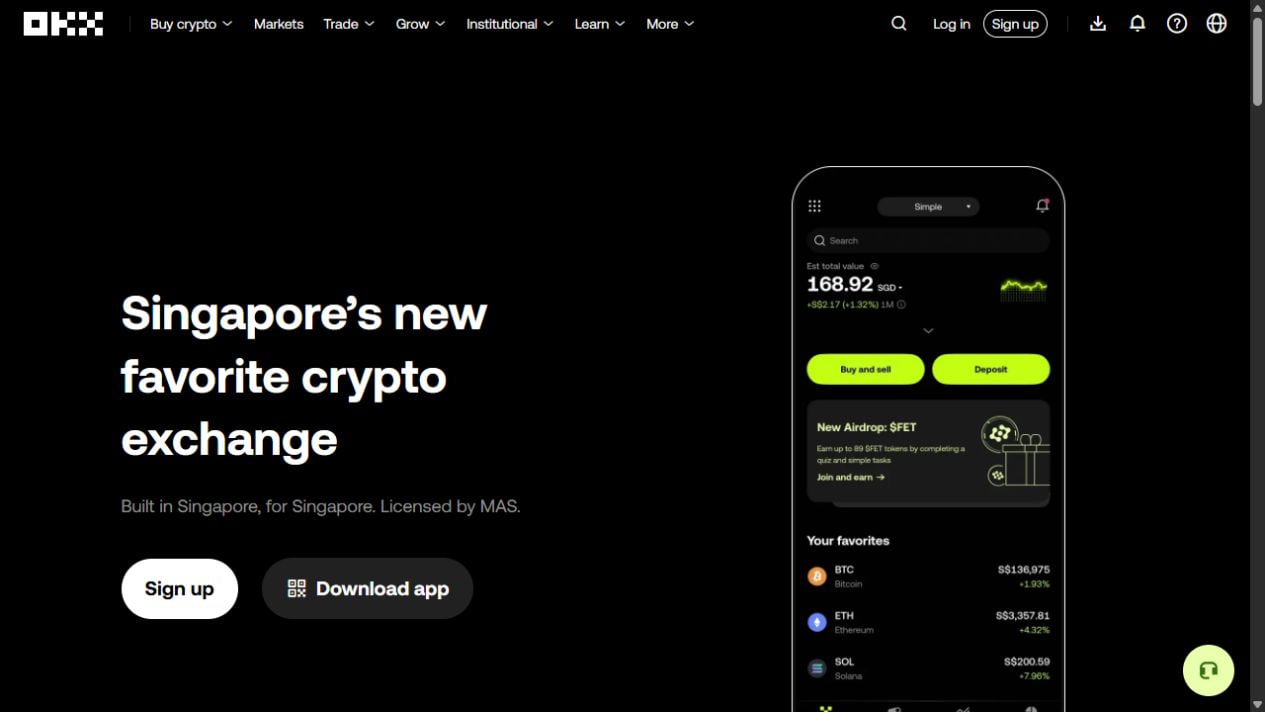
That boundary changed visibly in a Singapore discussion tracking OKX access. An early account found only Convert with an unfavourable spread, then updated the report when advanced trading became available; a later 2026 contribution described Singpass verification and order placement taking about 15 minutes. The thread supports checking the enabled interface rather than assuming the global fee screen is available.
SGD access follows a complete bank-to-asset-to-bank route
FAST and PayNow describe payment rails, not the total delivered cost. A complete retail route starts with a verified same-name bank account, credits SGD, executes the intended purchase, permits the required crypto transfer, converts back to SGD, and returns funds to a verified bank destination.
The MAS consumer-access measures prevent DPT providers from accepting locally issued credit-card payments for retail crypto access. That restriction helps explain why same-name PayNow and FAST transfers, rather than a Singapore credit card, form the main regulated SGD route.
Delivered cost can include deposit charges, spread, maker or taker fee, conversion, network fee, and withdrawal fee. KanalCoin’s Southeast Asia liquidity and slippage guide shows why execution must be measured at the intended order size.
Nearby markets work differently. Indonesia’s IDR onramp and withdrawal structure and Vietnam’s VND bank, P2P, and stablecoin routes use different regulators and exit mechanics. The same brand does not make them interchangeable with FAST or PayNow.
Match the exchange route to the job before opening an account
A Major Payment Institution licence covers named activities, not every related product. The entity and activity in the MAS directory should match the customer agreement and service holding the balance, but the final choice should begin with the action the account must complete.
| Account workflow | Practical starting point | Verify before funding |
|---|---|---|
| Simple SGD purchase and bank cash-out | Coinbase or Coinhako | Same-name bank route, retail quote or spread, supported asset, and successful return transfer |
| App, exchange, card, and wallet ecosystem | Crypto.com | Which product holds the balance, each internal conversion, and the entity behind custody |
| Advanced spot execution with local SGD access | OKX Singapore | Enabled local order-book interface, fee tier, available pairs, and withdrawal network |
| Business account, API, or negotiated OTC execution | Independent Reserve | Business eligibility, settlement terms, approval roles, reporting, and OTC counterparty |
| Withdrawal to self-custody | The platform supporting the exact asset and chain | Address controls, beneficiary information, wallet-ownership check, network fee, and credited amount |
The table identifies where to start, not a permanent winner. A platform can suit one workflow and fail another when the account, pair, order size, custody arrangement, or exit route changes. This distinction matters for derivatives and global products. Futures, leverage, staking, or another service may sit outside the Singapore entity’s DPT activity even when marketed under the same brand.
The same rule applies to payment use. A merchant considering crypto or stablecoin acceptance needs more than exchange access: collection, conversion, refund, accounting, beneficiary screening, and SGD settlement must form one documented flow.
Custody disclosure changes with the account and product
Retail custody means the platform controls the keys or withdrawal process while assigning a balance to the customer account. The MAS investor-protection measures require customer assets to be segregated, held under a statutory trust, reconciled daily, and protected by access and operational controls.
Those measures reduce the risk that customer assets are mixed with operating assets, but MAS also warns that recovery may still be delayed if a provider fails. A licence therefore changes the legal and control framework without turning a crypto balance into a bank deposit or guaranteeing full, immediate recovery.
Crypto withdrawal adds a separate compliance boundary. Singapore’s virtual-asset risk assessment explains that Travel Rule controls require originator and beneficiary information, while transfers involving an unhosted wallet can trigger ownership verification and enhanced monitoring. A self-custody address may therefore require an attestation or control check before the exchange releases funds.
Coinbase Prime custody is separate from its Singapore retail account. Coinhako publishes security controls without prominently naming a retail custodian on the pages reviewed. Crypto.com separates its licensed App provider from Crypto.com Custody Singapore.
The operational test remains consistent: confirm the contracting entity, select the exact asset and network, whitelist the destination where required, complete a small withdrawal, and preserve the transaction record. KanalCoin’s guide to wallet keys and self-custody explains the responsibility that begins after assets leave an exchange.
Use the Singapore entity and exit route as the operating map
The route depends on the job: Coinbase links retail access with PayNow and FAST; Coinhako provides a local SGD account; Crypto.com spans App, Exchange, wallet, and card; OKX exposes advanced spot execution; Independent Reserve extends into business and OTC use.
Before meaningful funding, match the entity to the MAS directory, confirm the product holding the balance, complete a small SGD round trip, and test the intended crypto network. That sequence establishes whether the account can complete the required job without turning the article into a platform ranking.
Frequently asked questions
How many DPT service providers appear in the MAS directory in 2026?
The filtered MAS directory returned 38 results in August 2026. The count includes more than retail exchanges, so it should not be interpreted as 38 consumer apps offering identical SGD trading and withdrawal services.
Does a MAS licence cover every product under an exchange brand?
No. The licence belongs to the named legal entity and listed activities. An App, global exchange, derivatives product, wallet, card, or institutional custody service may have a different entity or regulatory treatment.
How do SGD deposits and withdrawals work on a Singapore exchange?
The customer verifies an account, funds through an eligible same-name bank using FAST or PayNow where supported, executes the trade, sells back into SGD, and withdraws to a verified bank destination. Fees, reviews, limits, and processing differ by platform.
Does MAS regulation mean every crypto balance has the same custody protection?
No. Regulated providers have safeguarding and operational obligations, but the custodian, segregation structure, withdrawal controls, recovery process, and product entity still need to be checked for the specific account.
Disclaimer: This article is for informational and editorial purposes only and does not constitute legal, tax, or financial advice. Terms, fees, supported countries, and onboarding requirements can change and should be confirmed with each provider before integration.