


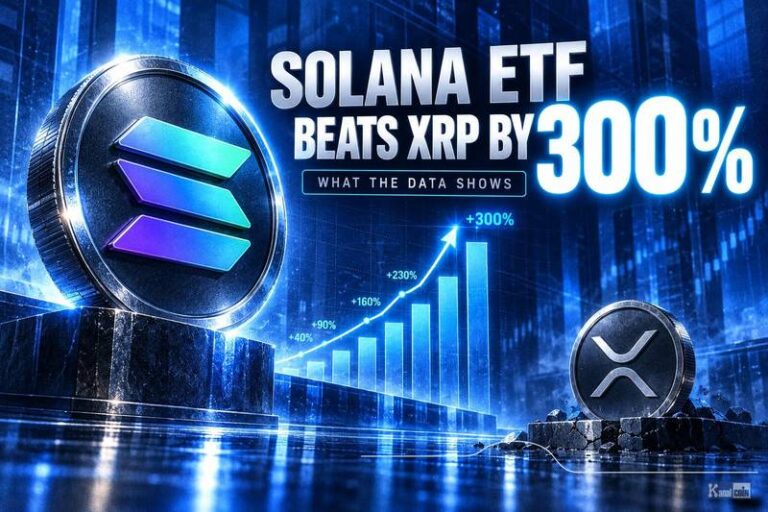
Bitwise’s Solana staking ETF held more than twice the trust assets of its XRP counterpart as of September 28, 2026, with issuer disclosures showing a gap that approaches the “300%” figure circulating in reports about U.S. crypto ETF flows.
Where the Asset Gap Between BSOL and the Bitwise XRP ETF Actually Comes From
According to Bitwise’s official BSOL disclosure, the Bitwise Solana Staking ETF held 11,314,052.33 SOL with a market value of $1,347,889,442.42 in trust as of September 28, 2026. Bitwise describes BSOL as a U.S. ETP offering 100% direct exposure to SOL. For related coverage, see Cyber Revolution Summit Saudi Arabia 2026.
On the same date, the Bitwise XRP ETF reported 413,140,980.47 XRP in trust with a market value of $618,955,422.72. That puts BSOL’s disclosed trust assets at roughly 2.18 times the XRP product’s figure, or about 118% larger, on an issuer-to-issuer basis. For related coverage, see Cyber Revolution Summit Morocco 2026.
The “300%” headline figure appears in a single unconfirmed report and most likely refers to daily or 30-day net inflow comparisons across all U.S. Solana versus XRP ETF products, not trust assets at a single issuer. That aggregate flow data, and the product list behind it, could not be independently verified from a primary source. It should be treated as an unconfirmed claim until the underlying dataset is disclosed. For related coverage, see CRYPTOCON SYDNEY RETURNS TO ICC SYDNEY WITH FREE GENERAL ADMISSION FOR 2026.
Why Solana’s ETF Structure May Draw Larger Allocations
One structural difference visible in the Bitwise disclosures is staking. BSOL is a staking ETF, and Bitwise has disclosed a 99% current staking allocation and a 5.50% net staking reward rate for the product. XRP does not have a native staking mechanism, so the Bitwise XRP ETF cannot offer a comparable yield component to investors.
For Southeast Asian institutional investors and regional exchanges such as Indodax and Tokocrypto, where yield-bearing products attract regulatory scrutiny but also strong retail interest, that structural gap matters. A staking ETF effectively packages network rewards into a regulated wrapper, which changes the risk and return profile compared to a plain spot product.
SOL traded at $118.07 at press time, down 0.66% over 24 hours, with a market cap near $69.4 billion and 24-hour volume of $4.25 billion. Solana recently hit a 2026 high as $18 million in short positions were liquidated, suggesting active speculative interest in the asset alongside the ETF demand.
The broader Crypto Fear & Greed Index sat at 71, classified as Greed, on the same reporting date. Elevated sentiment readings tend to support inflows into higher-beta assets, which could partly explain stronger allocations toward SOL products relative to XRP at this moment in the cycle.
What Investors and Regional Markets Should Watch Next
The Bitwise comparison covers one issuer and one date. Both products are subject to the same regulatory caveat stated in their official disclosures: neither the BSOL nor the Bitwise XRP ETP is registered under the Investment Company Act of 1940, meaning they do not carry the same investor protections as a standard U.S. mutual fund or registered ETF.
XRP has its own catalysts in play. Bitcoin and XRP both rallied after a key Fed inflation report earlier this month, and XRP’s legal and regulatory trajectory remains a distinct driver for its ETF flows separate from the product structure debate.
The reported category-wide figures, including claims about nine Solana ETFs holding $1.93 billion versus five XRP ETFs at $1.68 billion, come from a single unconfirmed report that does not name its underlying data provider or list the specific funds included. Until that dataset is publicly attributed, the Bitwise issuer disclosures remain the only verifiable comparison point, and they show a meaningful but narrower gap than the 300% headline suggests.
For regional regulators from the Monetary Authority of Singapore to the OJK in Indonesia, the growth of staking ETFs in U.S. markets is a live policy question. How those products are eventually classified, and whether a staking yield wrapper is permissible in local frameworks, will shape whether similar structures reach Southeast Asian retail investors at all.
Disclaimer: This article is for informational purposes only and does not constitute financial or investment advice. Cryptocurrency and digital asset markets carry significant risk. Always do your own research before making decisions.