

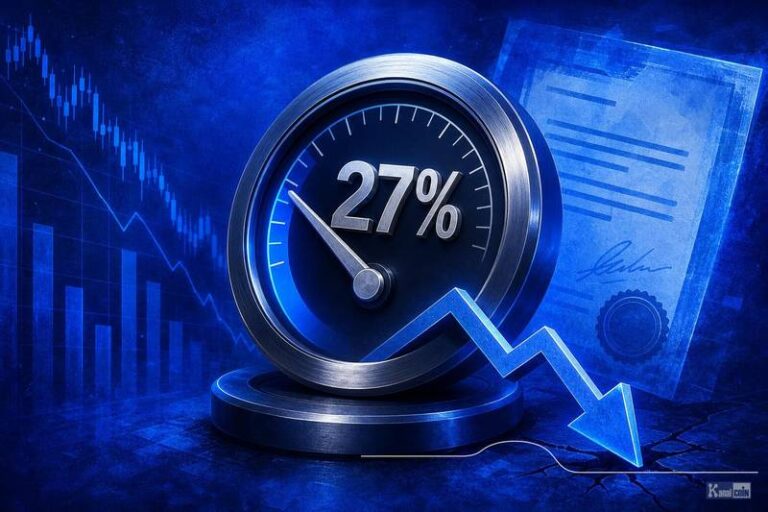
Polymarket traders now put the odds of the CLARITY Act being signed into law in 2026 at 27%, the lowest reading since May, even as Wall Street backing and political support for the crypto market-structure bill continue to build.
The contract tied to whether H.R. 3633 becomes law by the end of the year has slid to 27%, with the market having traded a cumulative $2,978,442 in volume. A prediction-market percentage is the price traders are willing to pay for a contract that pays out if the event happens, so a 27% reading translates to roughly a one-in-four implied chance of a signing this year. For related coverage, see Mike Haridopolos on the Clarity Act: BTC, ETH Market Impact.
That marks the lowest level since May and extends a steady decline that traders began pricing in early that month. The move reflects deteriorating market-implied confidence in a near-term signing, not evidence that the legislation has failed. For related coverage, see Judge blocks Minnesota from enforcing prediction market ban against Kalshi and Polymarket.
Why Support Has Not Lifted the Bet
The contrast is stark. The Senate Banking Committee advanced H.R. 3633 by a 15-9 vote on May 14, 2026, and the bill had already passed the House 294-134 in July 2025.
Support has since broadened to Wall Street. BlackRock, Fidelity, Franklin Templeton, Goldman Sachs and SoFi have all publicly backed the bill, according to CoinDesk reporting on the endorsement wave. Goldman Sachs CEO David Solomon said he is very supportive of moving the CLARITY Act forward.
Yet endorsement headlines have not moved the contract higher. The House Financial Services Committee noted on July 17 that the bill had cleared Senate Banking two months earlier and was still sitting on the Senate calendar, underscoring that the sticking point is floor time, not political will. The Senate’s decision to delay consideration of the bill is a large part of what traders are repricing.
Prediction markets can diverge from public narratives when execution risk rises. General support for a policy and the probability that Congress completes every procedural step before a deadline are two different things, and traders are weighting the latter more heavily than the former.
The current 27% print continues a trend already visible earlier this month, when CoinDesk reported odds had fallen to a then-record 32% as the Senate delay dragged on. Odds had previously sat higher, with a Polymarket contract on 2026 passage tracked at 38% in a recent reading, showing how quickly the market has repriced.
What Could Move the Market Next
The contract resolves specifically on whether H.R. 3633 is signed into law by December 31, 2026, with Congress.gov named as the resolution source. That makes the market acutely sensitive to the legislative calendar.
The Senate’s August 8 recess leaves only a handful of legislative days, according to CoinDesk, and unresolved ethics language remains a hurdle. Any scheduled floor vote, or a further delay, could reprice the contract quickly. Commentary from figures like Coinbase’s Faryar Shirzad on vote timing has repeatedly shaped near-term expectations.
Bitcoin has tracked the headlines. The token briefly slipped below $63,000 when the Senate delayed the bill on Monday before recovering, and it was trading at $64,107, up 1.26% on the day.
Broader sentiment remains cautious, with the Fear and Greed Index at 29, in Fear territory. For now, traders are pricing Senate floor-time risk more heavily than the growing list of endorsements, and the direction of the next reading is likely to hinge on whether the bill reaches the Senate floor before the recess.
Disclaimer: This article is for informational purposes only and does not constitute financial or investment advice. Cryptocurrency and digital asset markets carry significant risk. Always do your own research before making decisions.


