



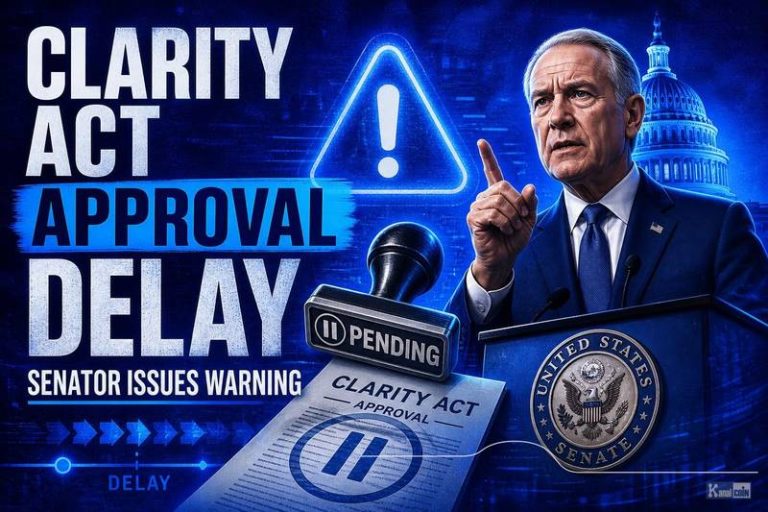
Senator Cynthia Lummis has warned that the CLARITY Act, a key piece of crypto regulatory legislation, risks missing its approval window if the Senate does not act before the August recess. The warning puts a spotlight on the narrowing legislative calendar and the political hurdles facing one of the most closely watched digital asset bills in Congress.
Lummis Sets an August Deadline for CLARITY Act Action
Senator Lummis, a long-time advocate for cryptocurrency legislation, urged passage of the CLARITY Act before the Senate’s scheduled August 7 recess. The message signals that without immediate movement, the bill could stall indefinitely as lawmakers shift focus to other priorities after the break. For related coverage, see SWIFT Launches Blockchain Ledger Pilot for Tokenized Deposits With 17 Global Banks.
The CLARITY Act aims to establish clearer regulatory definitions for digital assets, a step the crypto industry has lobbied for as agencies like the SEC and CFTC have clashed over jurisdiction. Lummis framed the recess deadline not as a preference but as a practical constraint, given how little floor time remains on the legislative calendar. For related coverage, see BitGo Introduces Quantum Protection for Institutional Bitcoin Wallets.
Crypto Briefing reported on the senator’s push, noting that the bill’s supporters view the pre-recess window as critical. If the Senate adjourns without a vote, the next realistic opportunity could be months away. For related coverage, see Bybit Announces LBTC Delisting From Bybit On-Chain Earn.
What Is Holding Up the Bill
The delay warning points to scheduling and procedural bottlenecks rather than outright opposition. Senate floor time is a scarce resource, and crypto legislation competes with budget debates, nominations, and other priorities for a limited number of voting days.
The House has already moved on related crypto legislation. A recorded vote on the House side shows that digital asset bills have cleared procedural hurdles in the lower chamber, but Senate action has lagged behind.
Lummis’s warning suggests the bottleneck is not opposition to the bill’s substance but the mechanics of getting it scheduled. Without a committed floor vote date, the bill risks being crowded out before the recess cutoff.
Why the Timeline Matters for Crypto Regulation
The CLARITY Act is significant because it would create statutory boundaries between which digital assets fall under SEC oversight and which belong to the CFTC. The current lack of clarity has led to enforcement-first regulation, where companies learn the rules through lawsuits rather than legislation.
For crypto businesses and exchanges, including those operating in Southeast Asia that handle U.S.-listed tokens, the bill’s outcome could shape compliance requirements and market access. The SEC under Chair Atkins has signaled interest in clarifying crypto custody and tokenized securities rules, but legislative action would carry more permanence than agency guidance alone.
A delay past August would also push the timeline into a period when midterm election campaigning intensifies, further reducing the appetite for complex financial legislation. Industry watchers tracking developments like the growing anticipation around an XRP ETF decision see the CLARITY Act as part of a broader wave of regulatory milestones that could define the next phase of U.S. crypto policy.
If the Senate fails to act before August 7, the CLARITY Act joins a growing list of crypto bills that have stalled despite bipartisan interest, leaving the industry to navigate an uncertain regulatory environment heading into 2027.
Disclaimer: This article is for informational purposes only and does not constitute financial or investment advice. Cryptocurrency and digital asset markets carry significant risk. Always do your own research before making decisions.