


USDT is usually the stronger exchange cash-out asset in Southeast Asia when the destination venue has deeper USDT quotes and a supported local-bank or P2P exit. USDC becomes the better route when the receiving platform supports it directly, the business needs clearer reserve evidence, or converting through USDT would add another trade.
The comparison starts at the destination exchange and works backward through the local fiat pair, deposit network, account eligibility, withdrawal method, and test transfer. This keeps the article inside the KanalCoin exchange-access pillar: the winner is the token that reaches a usable VND, IDR, SGD, MYR, THB, or PHP route, not the token with the better global slogan.
The destination exchange decides which stablecoin works
The receiving venue determines the better stablecoin whenever only one token has a liquid local pair, supported deposit network, and working fiat withdrawal. Global circulation matters as background, but it cannot replace a live deposit screen and an executable cash-out quote on the account that will receive the funds.
| Country | Exchange or provider and pair | Deposit network | Fiat rail | What the public evidence establishes |
|---|---|---|---|---|
| Philippines | Coins.ph USDT/PHP and USDC/PHP | The cited market notice does not name every accepted chain; confirm the live deposit screen | PHP wallet to supported banks and e-wallets | Both direct PHP pairs are active; the July 2026 maximum order size was PHP 6.2 million for each pair |
| Indonesia | Indodax USDT/IDR and USDC/IDR | Confirm the exact chain and maintenance status in the account | IDR balance to a verified bank route | Both direct IDR markets are visible; USDT/IDR showed materially more activity than USDC/IDR on the reviewed market page |
| Thailand | Bitkub USDT/THB and USDC/THB | Confirm the supported token network before deposit | THB balance to an eligible Thai bank account | Both direct THB markets are listed; USDT/THB displayed substantially higher 24-hour volume than USDC/THB |
| Singapore | Crypto.com Singapore USDC account | Confirm the accepted native USDC chain and wallet-ownership requirement | SGD account and FAST bank transfer | A direct USDC-to-SGD product route is public; an equivalent USDT route was not established by the cited page |
| Malaysia | Luno Malaysia public pages reviewed | A like-for-like USDT and USDC deposit comparison was not publicly confirmed | MYR deposit and withdrawal access is advertised | Do not call either token the winner until the account exposes the pair, chain, quote, and withdrawal route |
| Vietnam | No licensed local venue with a comparable public pair was confirmed in the source set | Not publicly confirmed | No generally available licensed VND exchange exit was confirmed | Treat offshore exchange or P2P access separately from a licensed domestic cash-out route |
The Philippines row is more than a product-listing signal. In a Philippine discussion about converting crypto to fiat, a participant identified Coins.ph spot markets for both USDC/PHP and USDT/PHP, while describing PDAX Prime as a bank-withdrawal route with a reported 0.2%-0.3% spread and a PHP 1 million minimum. Those figures are community claims rather than a funded KanalCoin test, but they show why route size can change the preferred venue even when both stablecoins have a peso pair.
USDT usually brings the deeper regional exchange route
USDT is the better operational asset when the exact exchange or P2P market already quotes it deeply on a network both parties support. The Artemis stablecoin payments study found USDT dominant by a wide margin across the Asian markets in its dataset, with India the notable exception where USDC represented nearly half of observed stablecoin volume. The same research found Asia had a more varied network mix than other regions, even though TRON led in many markets.
The regional adoption evidence supports USDT as the first token to check, not an automatic winner. Tether’s March 2026 reserve report showed total assets of $191.77 billion, liabilities of $183.54 billion, and net equity of $8.23 billion. Tether publishes reserve reports quarterly, while direct issuance and redemption is designed for verified customers and carries a minimum transaction value of $100,000. Most retail users therefore depend on an exchange or P2P counterparty rather than redeeming with Tether itself.
For a VND or IDR payout, verify the local route rather than inferring it from a USDT/USDC trading pair. Local account eligibility, beneficiary-name rules, withdrawal limits, and cash-out mechanics belong in the same decision as token liquidity.
USDC can remove a conversion on supported business routes
USDC becomes the cleaner exchange route when the receiving platform already supports a direct USDC pair or when a business account needs reserve evidence and transaction records for approval. Selling USDC directly can be cheaper than converting USDC to USDT first, but only when the direct order book and local withdrawal are active at the required size.
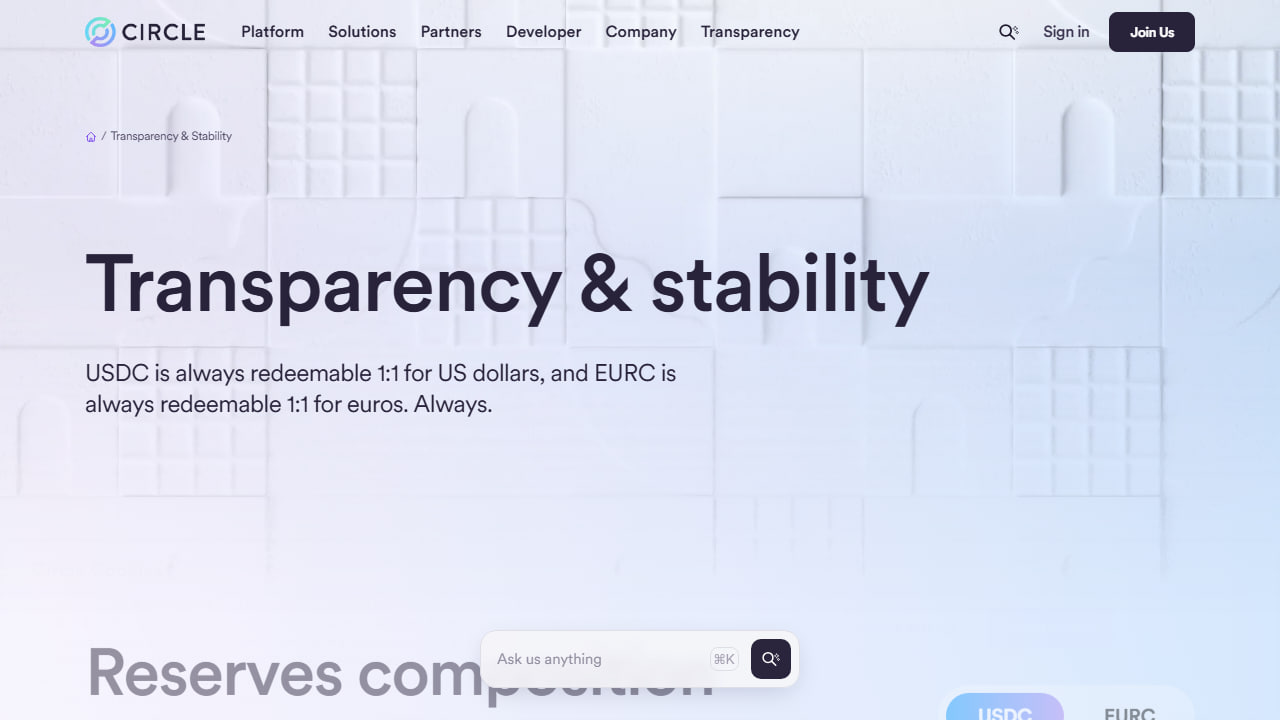
Circle reported $72.1 billion of USDC in circulation on August 10, 2026, with reserves equal to or greater than circulation. It described the reserve across bank deposits, overnight reverse Treasury repurchase agreements, and short-dated US Treasuries, with the majority held in the Circle Reserve Fund. Circle discloses reserve holdings weekly and publishes third-party assurance monthly, creating a more frequent evidence cycle than Tether’s quarterly report.
These figures make issuer exposure easier to review, but they do not tell a recipient whether a Southeast Asian exchange supports native USDC on Base, Solana, Polygon, or Ethereum. Circle’s USDC product page must still be read beside the venue’s current deposit screen, order book, and fiat-withdrawal status.
Network support can overturn the exchange comparison
Network compatibility can outweigh the token comparison because USDT and USDC exist across multiple chains, while a receiving service may accept only selected versions. Matching the ticker without matching the network can convert a routine payment into a recovery case.
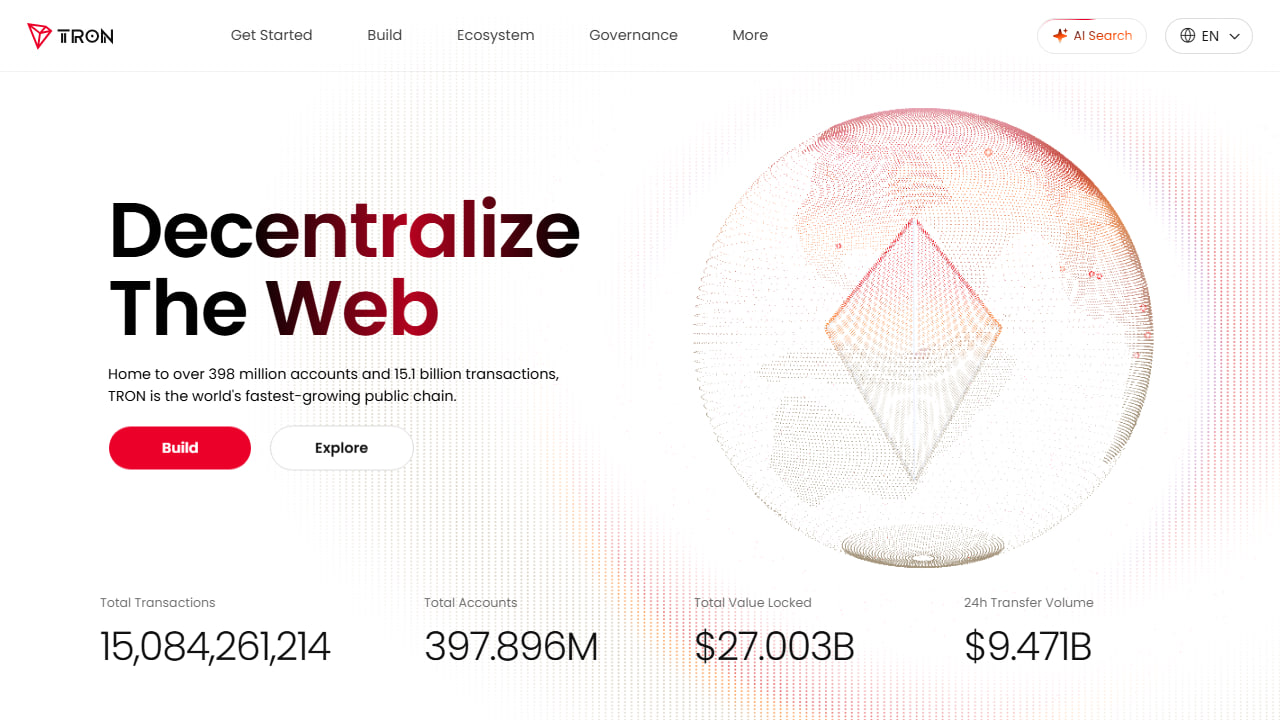
TRON’s broad activity helps explain why many venues expose a TRC-20 deposit option, but network-wide accounts and transaction totals are not evidence of USDT liquidity on a particular exchange. The useful evidence is whether the recipient’s venue currently accepts the exact token contract, credits that chain, and permits the resulting balance to trade into the intended exit asset.
| Transfer route | When it can fit | Failure that matters at the exchange |
|---|---|---|
| USDT on TRON | The receiving venue lists TRC-20 USDT and the sender values broad exchange availability | Deposit maintenance, wrong address format, energy or withdrawal charge changes |
| USDT on Ethereum | Both sides require ERC-20 infrastructure or deeper Ethereum integration | Gas cost and an unsupported token contract |
| Native USDC on a supported chain | The venue explicitly lists that Circle-issued version and a useful sell pair | Confusing native USDC with a bridged or third-party representation |
| USDC through an intermediate conversion | No direct local route exists but another venue can convert it | Extra spread, transfer, compliance review, and another counterparty |
A costly failure illustrates the distinction. In a Coinbase wrong-network incident report, a user said $400,000 in USDC was sent from Hyperliquid L1 to a Coinbase-controlled address but was not credited because the network was unsupported. The amount and outcome are the user’s account, not independently verified, yet the prevention rule is sound: confirm the exact chain and send a small test before moving the balance.
Network selection should include five checks before approval: token contract, sending chain, receiving chain, address or memo requirement, and the destination’s current confirmation policy. KanalCoin’s Southeast Asian exchange-liquidity test adds the execution layer: compare the intended pair and order size rather than treating reported exchange volume as proof of a fill.
Local bank rails complete the cash-out comparison
The stablecoin comparison ends at the bank or approved payment route, not at the exchange balance. A venue can support USDT and USDC while restricting fiat withdrawals by legal entity, residency, account type, bank partner, or beneficiary-name rule. Those conditions are why the same token can work in one Southeast Asian market and fail in another.
In Singapore, a USDC balance can fit a business workflow while still requiring a separate SGD conversion and bank withdrawal. XSGD may align the settlement asset with local accounting, but only if the selected venue or provider supports redemption on the required network. The relevant comparison is USDC-to-SGD against USDC-to-XSGD-to-SGD, including both spreads and account eligibility.
A Singapore discussion about cashing out from Crypto.com described two routes: moving USDC or USDT from the exchange to the app before selling into SGD or XSGD, and swapping into XSGD before withdrawing through StraitsX. Another participant in that thread estimated a 0.3%-0.5% USDC-to-SGD spread, but the comments are two years old and cannot substitute for a current quote. Their enduring value is the route map: exchange execution, app conversion, local stablecoin option, KYC, and bank withdrawal are separate cost points.
Vietnam and Indonesia expose the same last-mile problem through different regulatory and banking conditions. The guides to VND exchange and P2P withdrawals and IDR exchange cash-out during the OJK transition show why a USDT quote is incomplete without the legal provider, account-name rule, withdrawal limit, and receiving bank.
Exchange custody and issuer controls create two separate gates
Both USDT and USDC are centrally issued, while the exchange separately controls account access, deposit crediting, trading, and fiat withdrawal. Passing the issuer layer does not guarantee that an exchange will accept the deposit, and a credited exchange balance does not guarantee that the bank withdrawal will clear.
A retail sender should keep the transaction hash, source record, exchange deposit confirmation, trade receipt, and bank payout record together. KanalCoin’s coverage of native USDC and cross-chain transfer infrastructure illustrates why the token representation matters, while the live exchange deposit screen remains the authority for the accepted contract and network.
A business route adds approval, reconciliation, refund, and source-of-funds requirements. KanalCoin’s coverage of third-party stablecoin payment infrastructure shows why the issuer, wallet, platform, exchange, and payout provider must be treated as separate counterparties rather than one seamless service.
Choose the token by its complete exchange exit
For a local exchange or P2P cash-out, USDT is the first route to test because regional usage and exchange availability are generally stronger. USDC can win when the receiving venue supports a direct pair, the account needs clearer issuer documentation, or using USDT would require an unnecessary conversion.
The recommendation should name the asset, chain, receiving venue, sell pair, fiat rail, test amount, and fallback. “USDT on TRON to a verified Indonesian venue, followed by an IDR withdrawal to a matching bank account” is an exchange route. “USDT is better in Asia” is only a market observation.
Before sending a meaningful amount, compare both available order books, confirm the deposit contract and beneficiary name, then run a small amount through trading and fiat withdrawal. The better stablecoin is the one that reaches the local account without an unsupported network, extra conversion, or blocked exit.
Frequently asked questions
Is USDT more liquid than USDC on every Southeast Asian exchange?
No. USDT has stronger regional adoption overall, but the relevant evidence is the exact venue, pair, network, order size, and local withdrawal route. USDC can provide the better fill when an exchange supports it directly and converting through USDT would add cost.
Does stronger USDC reserve reporting make cash-out easier?
No. Reserve reporting makes issuer exposure easier to inspect, but exchange support and bank withdrawal remain separate. A user can hold fully backed USDC and still lack a supported local pair or fiat exit.
Can USDT and USDC be sent to the same wallet address?
Sometimes the displayed address format is identical across compatible networks, but that does not make the networks interchangeable. Confirm the exact token contract and receiving chain, then send a small test before transferring the balance.
When should USDC be converted to USDT before cash-out?
Convert only when the destination exchange has a materially better executable USDT pair and the improvement exceeds the conversion spread, withdrawal charge, and additional counterparty risk. A direct USDC exit is preferable when its final local-currency result is competitive.
Disclaimer: This article is for informational and editorial purposes only and does not constitute legal, tax, or financial advice. Terms, fees, supported countries, and onboarding requirements can change and should be confirmed with each provider before integration.