



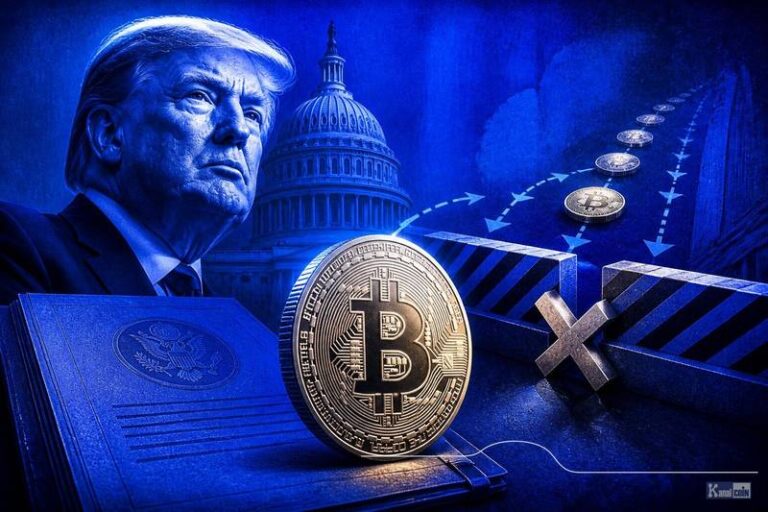
Trump’s Bitcoin policy can widen the ways Bitcoin enters federal custody, but on its own it does not authorize a predictable, recurring multibillion-dollar US government buying program.
What Trump’s Bitcoin policy can actually expand
The March 2025 executive action, titled Establishment of the Strategic Bitcoin Reserve and United States Digital Asset Stockpile, creates a framework for how the government holds digital assets it already controls. For related coverage, see Hashdex to Close Its Smallest Bitcoin ETF After Two Years.
The order draws a line between two structures: a Strategic Bitcoin Reserve for Bitcoin and a separate United States Digital Asset Stockpile for other tokens. That distinction matters because it defines what the government treats as a long-term hold versus other seized assets. For related coverage, see American Bitcoin Mined 932 BTC in Q2 2026, Record High.
In practice, federal Bitcoin holdings can grow through seizures, forfeitures, and inter-agency transfers rather than open-market purchases. As AP reported, the reserve is initially built from cryptocurrency already forfeited in criminal and civil cases, not from new taxpayer-funded buying. For related coverage, see Blockchain Data Shows Trump Crypto Token Buyers Down $3.8 Billion.
Why the policy cannot create a predictable multibillion-dollar buyer
Custody authority is not the same as appropriated buying authority. An executive order can direct how existing coins are managed, but a standing purchase program of that scale generally requires action from Congress. For related coverage, see Bitcoin Surges as Institutional Interest Grows Amid Economic Uncertainty.
That gap is why lawmakers moved separately. Senator Cynthia Lummis and colleagues introduced legislation to codify the Strategic Bitcoin Reserve, an implicit acknowledgment that the executive order alone does not lock in a durable acquisition mandate.
The concept also faces policy criticism. The Cato Institute argued in commentary that a strategic Bitcoin reserve makes no sense, questioning the rationale for the government holding the asset as a strategic instrument at all.
Nothing in the order establishes a recurring purchase schedule or a committed budget line. Readers watching for a guaranteed federal bid should note that no routine multibillion-dollar buying commitment is created by the policy on its own.
Why the distinction matters for markets and Southeast Asia
Labels shape interpretation. A “strategic reserve” framing can signal official endorsement, but symbolic policy support is not the same as guaranteed demand from a standing buyer. This is the same signaling dynamic that has fed narratives around growing institutional interest in Bitcoin.
For ASEAN traders, US policy signals often move regional sentiment before they move fundamentals. A custody-focused reserve may firm the long-term political narrative around Bitcoin without adding the steady flow demand that some regional exchange participants price in, a nuance also visible in how markets react to macro policy commentary from US officials.
The distinction also colors reactions to US-centric crypto ventures, from mining output to tokens, where headline enthusiasm has repeatedly outrun realized value, as seen in losses among Trump crypto token buyers.
Concrete watch points are the Lummis codification effort, how agencies implement custody and transfers of already-seized coins, and any future executive guidance clarifying whether acquisition ever moves beyond forfeiture into direct purchases.
Disclaimer: This article is for informational purposes only and does not constitute financial or investment advice. Cryptocurrency and digital asset markets carry significant risk. Always do your own research before making decisions.