



Pendle lets you split a yield-bearing token into a principal part and a yield part, then trade each one separately. This review covers what I could see and verify on 9 November 2026, and where the evidence stops.
Quick verdict: Pendle is the clearest way in DeFi to lock a fixed rate or bet on future yield, with open-source contracts and several named audits. The trade-offs are a real learning curve, risk inherited from the underlying assets, and a market where headline APYs can look better than they are.
| Item | Detail |
|---|---|
| Best for | Locking fixed yield with PT, trading yield exposure with YT, providing liquidity to yield markets |
| Fees | 5% fee on YT yield, swap fees that scale with time to maturity, network gas |
| Custody | Non-custodial, you connect your own wallet |
| Audits | Ackee, Dedaub, Dingbats and Code4rena wardens per the docs |
| Editorial score | 4.1 / 5 |
What I tested, and what I did not
I opened app.pendle.finance on desktop (1440px), tablet (1024px) and phone (430px), read the security page and fee docs, then connected a throwaway MetaMask wallet that holds no funds and viewed the connected dashboard. I did not buy PT or YT, add liquidity or redeem anything, so statements about slippage, real fixed returns and gas costs come from documentation and community reports, not from my own positions. The swap page I tried to open returned a 404 and is not used here.
What Pendle actually is
Pendle takes a yield-bearing asset such as a staked stablecoin and splits it into two tokens. The Principal Token (PT) is redeemable for the underlying asset at maturity, and it trades at a discount before then, so buying PT locks in a fixed rate. The Yield Token (YT) collects the yield until maturity, so buying YT is a leveraged view on yield.
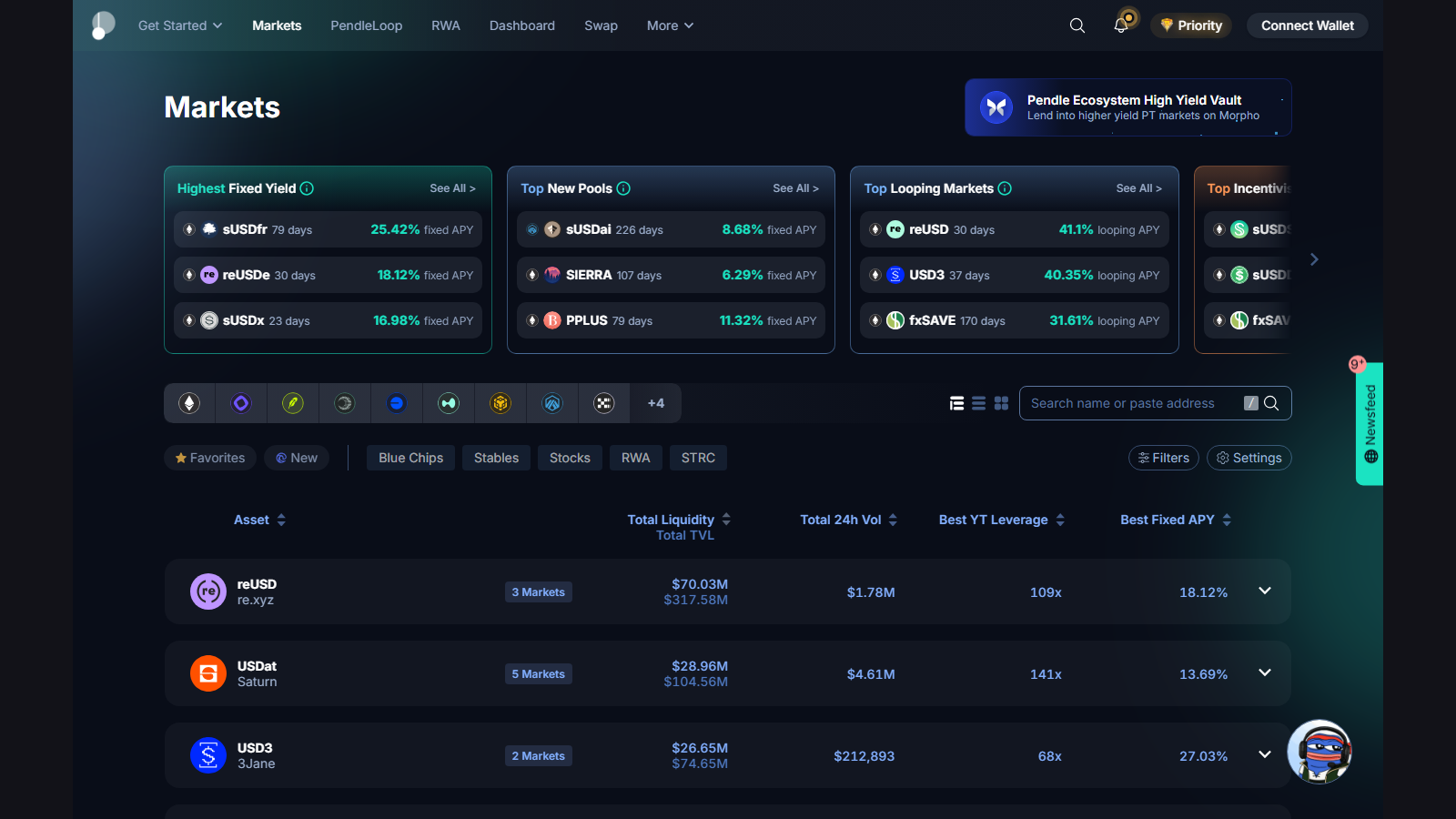
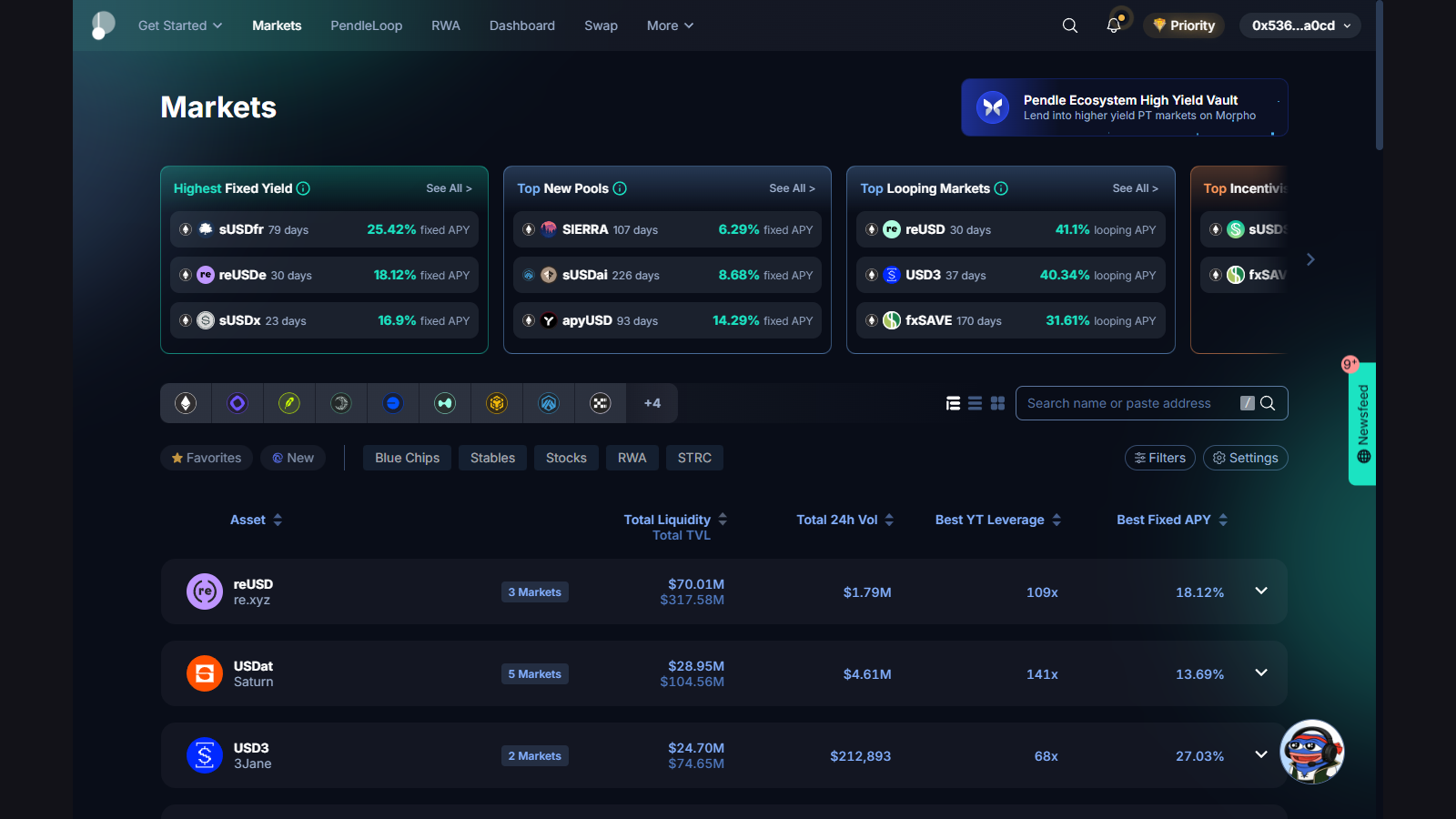
Pendle markets page on desktop. The top fixed yields at capture were sUSDfr at 25.42% and reUSDe at 18.12%, with the reUSD market showing $70.03M liquidity and $317.59M TVL.
Those yields move constantly and the very high ones sit on smaller or riskier assets, so read them as a snapshot, not a promise. The Pools page groups markets by underlying asset; the sUSDe market from Ethena had 3 markets and $45.01M TVL when I looked.
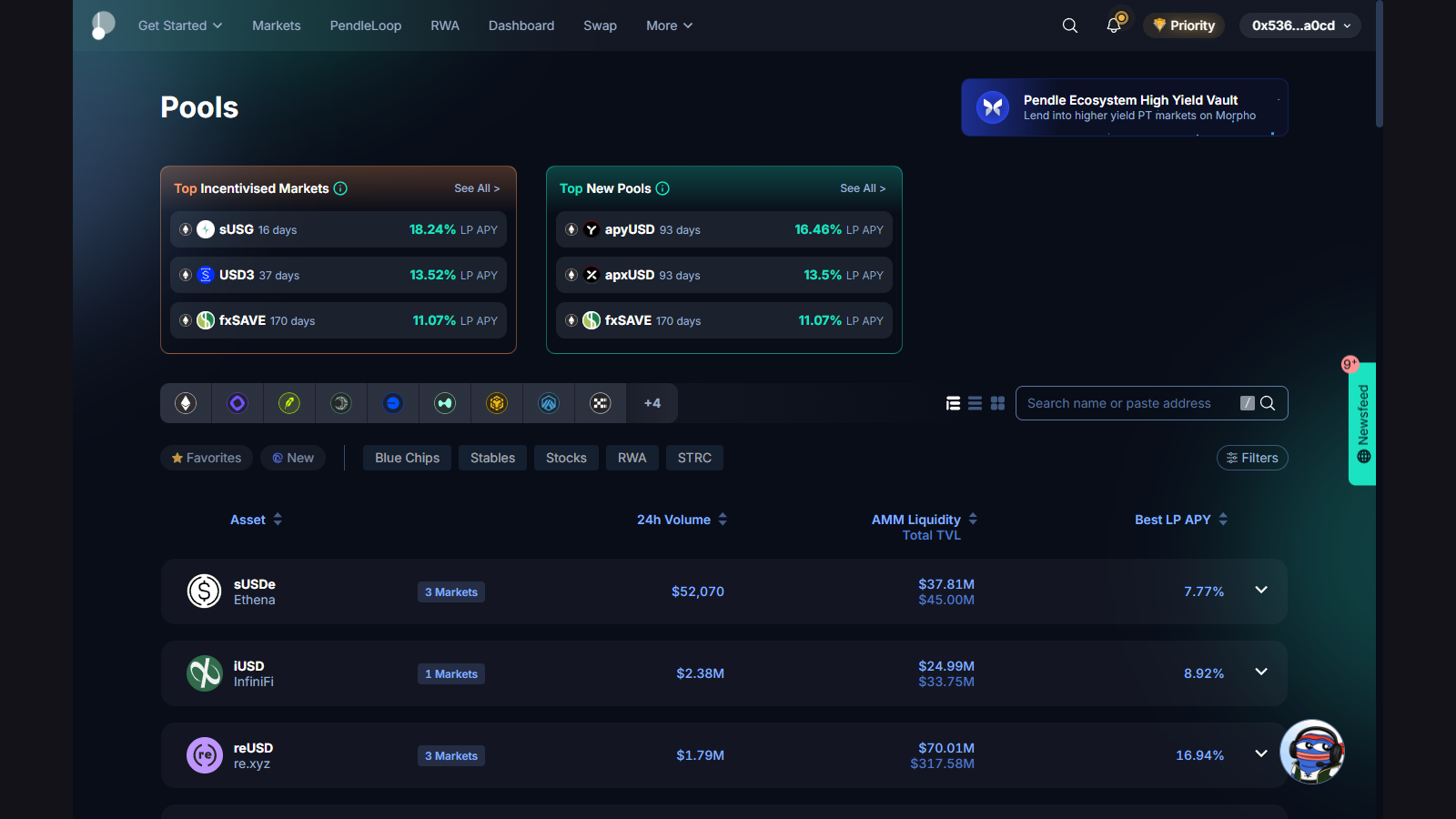
Pools view. Each underlying asset can have several maturities, and you pick the date that matches how long you want to lock.
Using Pendle on desktop, tablet and phone
The desktop view is a dense table with fixed APY, liquidity and maturity per market. It is readable once you know what PT and YT mean, but it assumes you do. On tablet the layout keeps the same information with tighter columns.
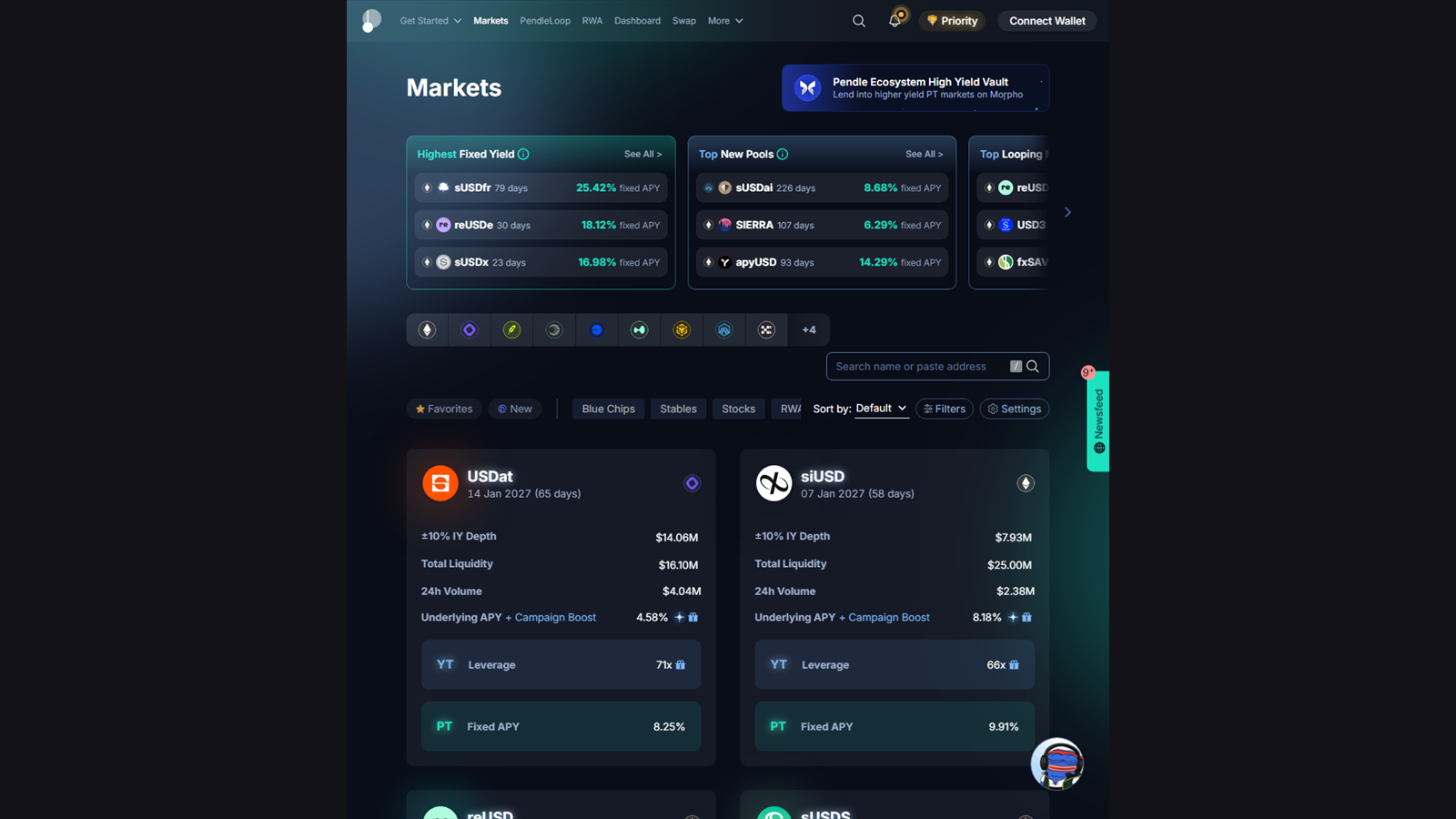
On phone the table collapses into a stacked list.
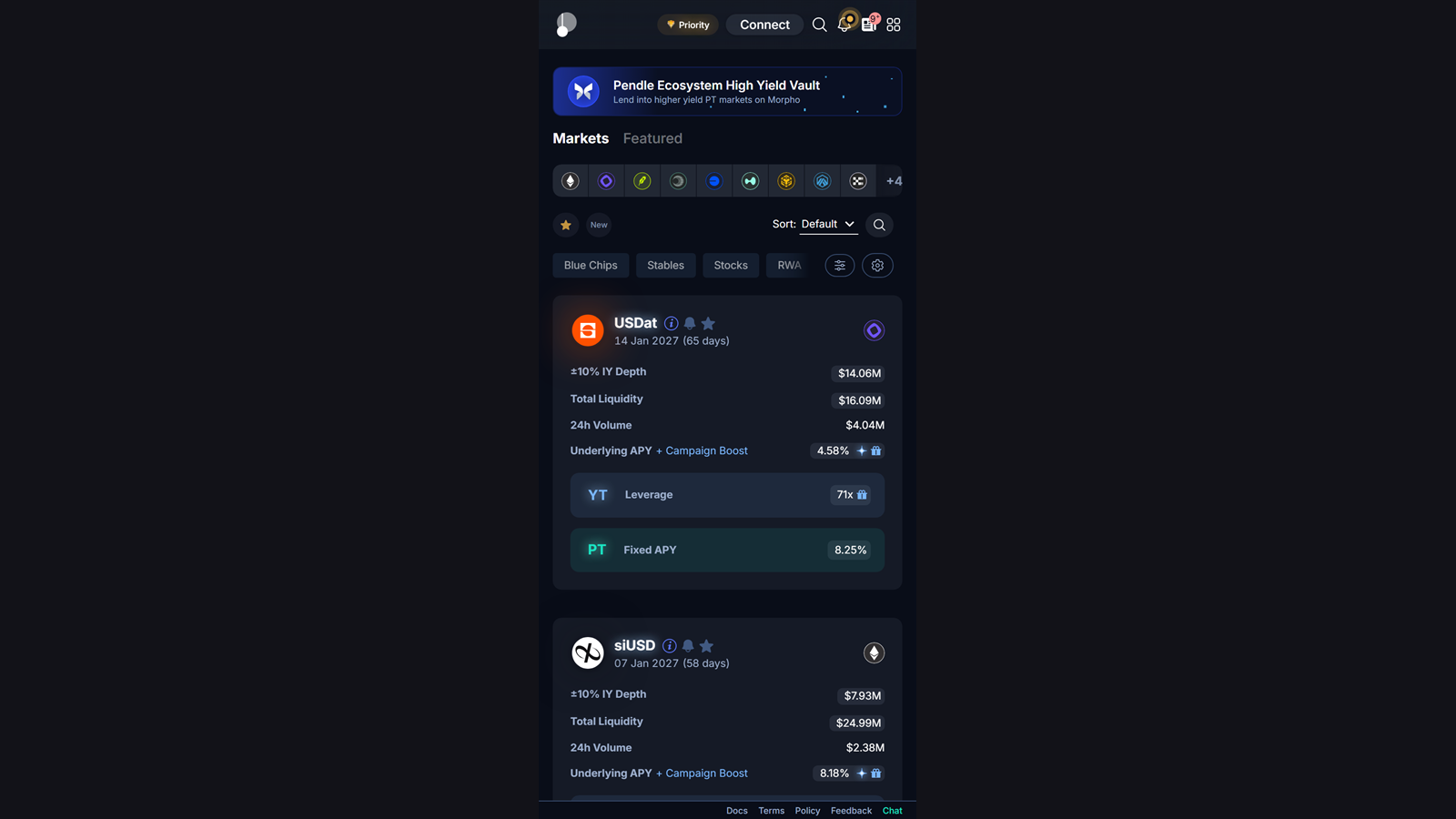
Best for: scanning fixed rates quickly, then doing the actual trade on desktop.
Connecting a wallet
The Connect Wallet modal asks you to tick an “I agree to terms” box first, then lists WalletConnect, MetaMask (marked installed), My Wallet and All Wallets.
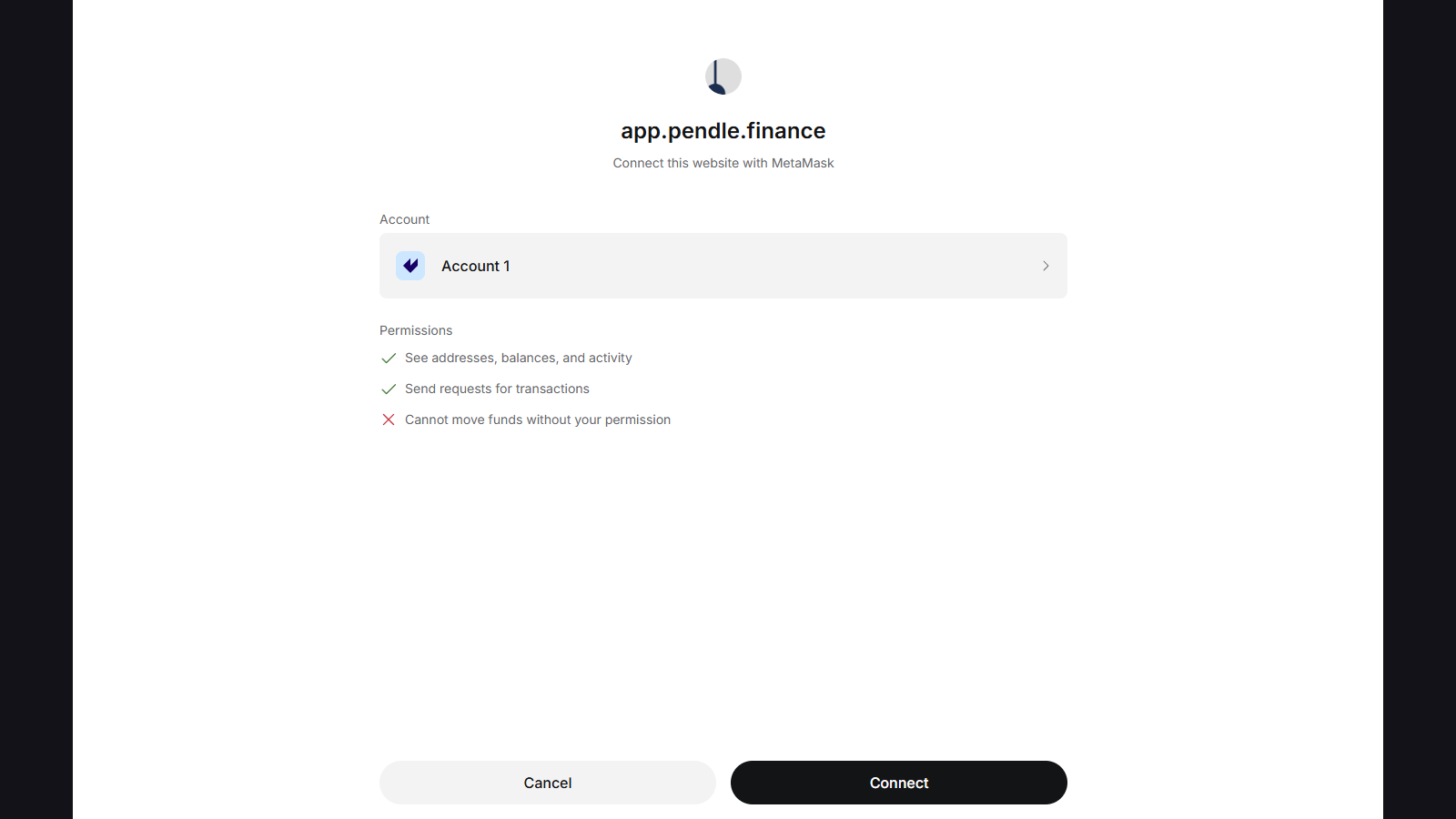
Choosing MetaMask opened a normal MetaMask window asking to connect my account to app.pendle.finance.
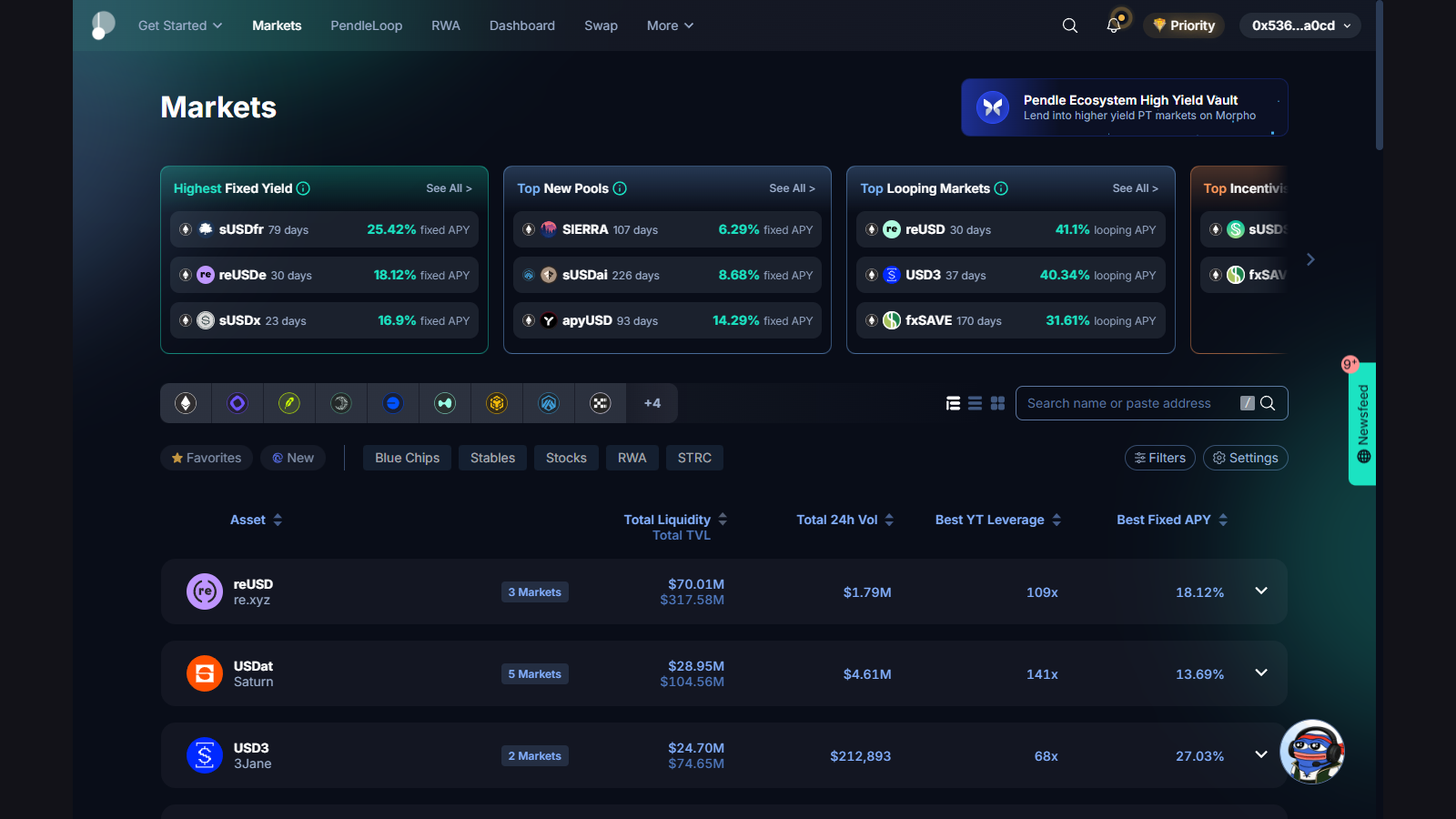
After approval, the header showed my shortened address.
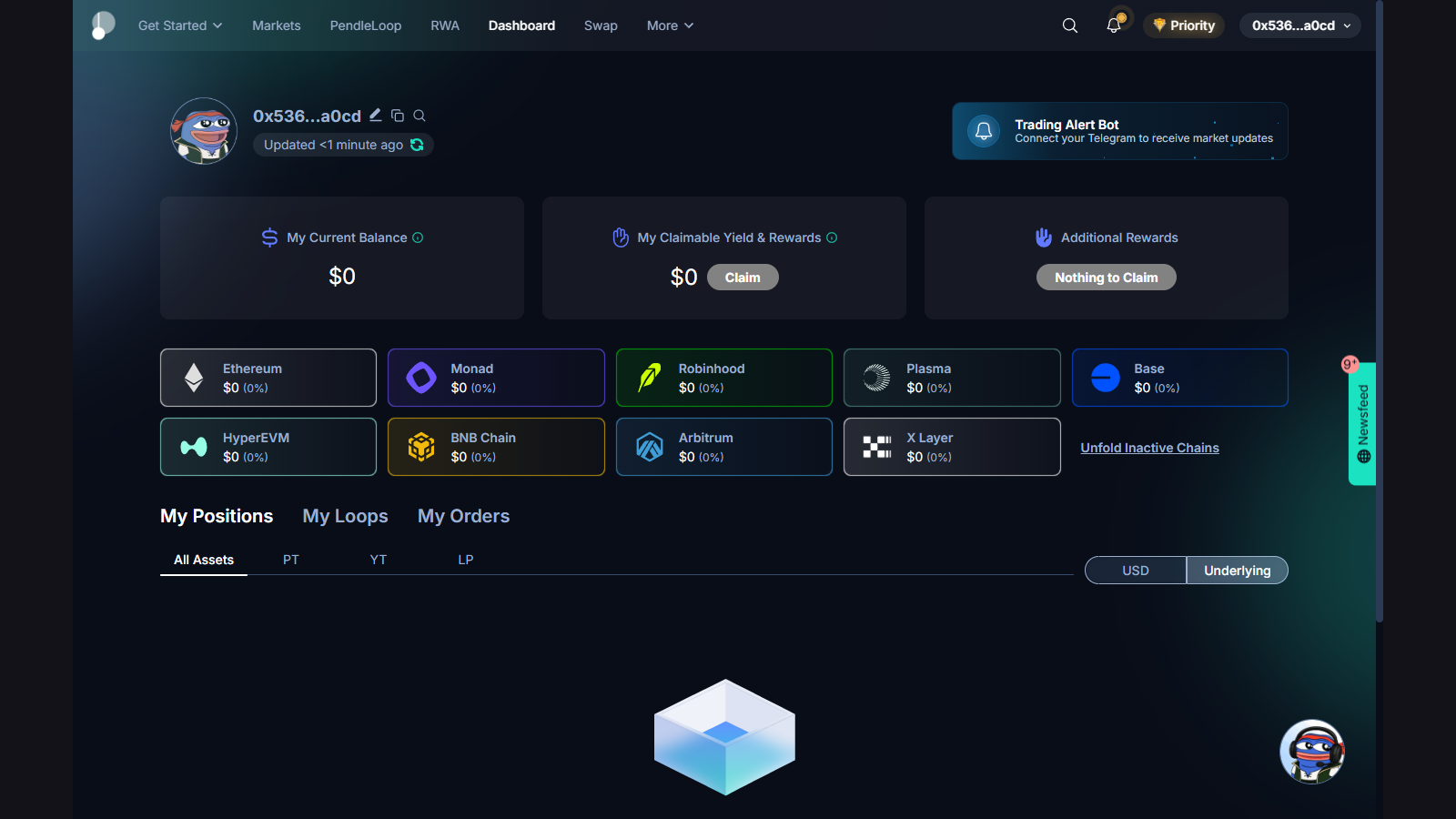
The dashboard then showed $0 balances, per-chain tiles for networks such as Ethereum, Base and Arbitrum, and empty positions.
Fees and costs
According to the Pendle fee docs, revenue comes from a 5% fee on all yield accrued by YT plus swap fees. The trading fee is calculated as the fee tier divided by 365, multiplied by the days left to maturity, so fees shrink as a market approaches its end date. Redeeming PT after maturity carries no protocol fee. Of swap fees, 20% go to liquidity providers, and the rest of the swap fees plus all YT fees are split 80% to PENDLE buybacks, 10% to the treasury and 10% to operations. The docs also say yield on unredeemed matured positions is redirected to the treasury, so do not leave matured YT sitting.
On top of that you pay gas, which matters for small trades on Ethereum mainnet.
Risks you inherit
Pendle does not remove the risk of the asset underneath. If the underlying token loses its peg or its yield source fails, your PT and YT are affected. The Pendle FAQ tells users to exercise caution and says Pendle is not responsible for losses from exploits in third-party contracts.
That boundary matters. In September 2024, about $27M was lost in the Penpie hack, a reentrancy bug in the staking contract’s reward harvesting, as explained by Halborn. Penpie is a third-party protocol built on top of Pendle, not Pendle’s own contracts, but it shows how much of the risk sits in the ecosystem around the core.
Community sentiment is mixed in a useful way. In an r/defi thread on yield trading platforms, commenters praise PT fixed rates, while one points out that headline APY is everywhere but stability and safety have been the weak dimensions. A thread titled any Pendlers here mentions PT APYs of 14 to 16% on some pools, and another asks whether Pendle’s new RWA pools are worth rotating into. I read these for sentiment only. One third-party site claims a $5B TVL for Pendle; I did not verify that, so treat it as their claim.
Security and audits
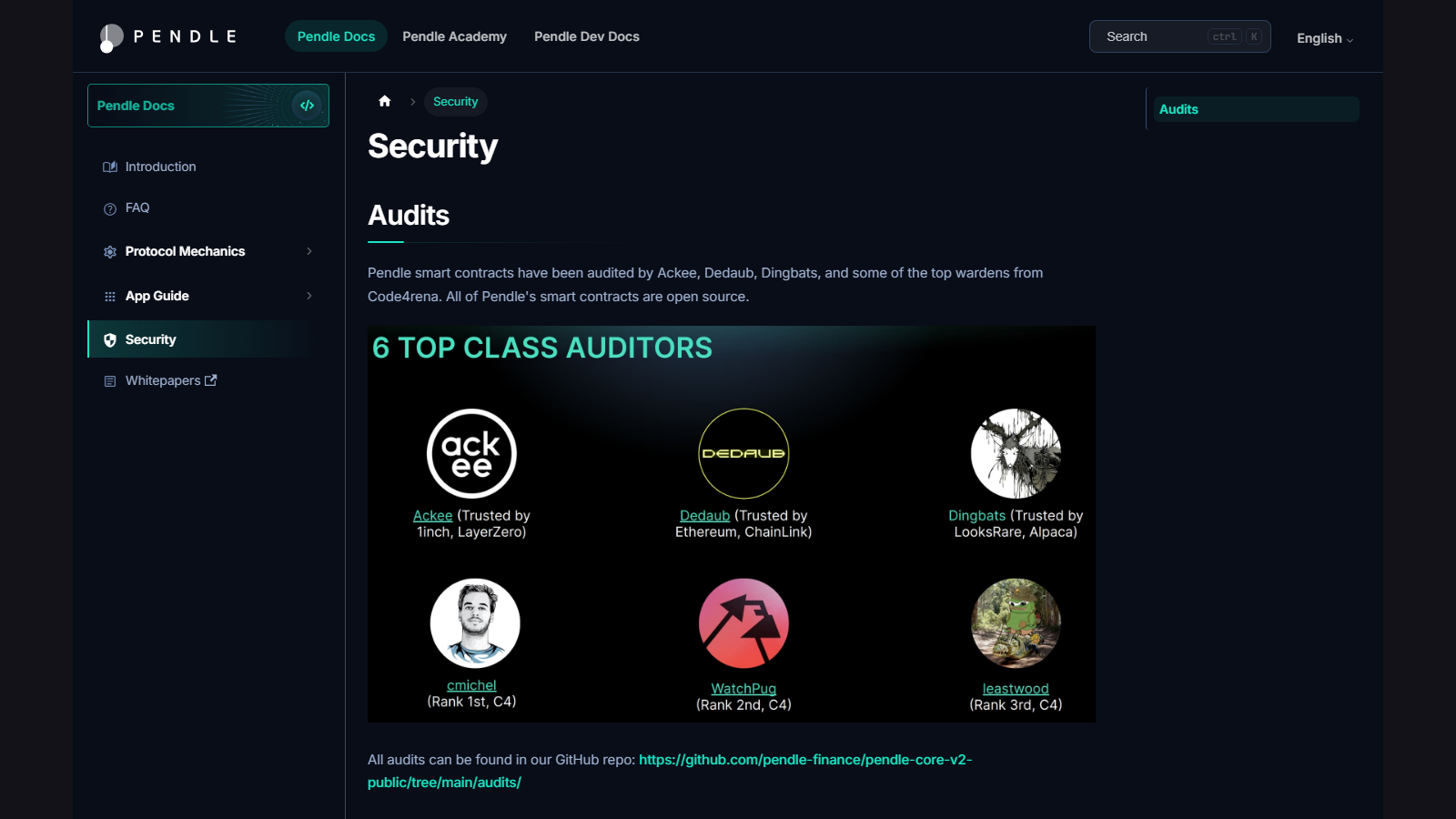
The docs security page lists audits by Ackee, Dedaub, Dingbats and Code4rena wardens, states that the contracts are open source, and points to audit reports in the pendle-finance/pendle-core-v2-public GitHub repo. The app’s own page highlights six top-class auditors.
I did not read the audit reports themselves, so I cannot say which findings were fixed.
Who should use Pendle
Good fit:
- Users who want a fixed rate on a yield-bearing asset they already understand
- Traders who want leveraged exposure to yield with YT
- Liquidity providers comfortable with maturity-based markets
Think twice:
- Beginners who have not learned how PT, YT and maturity work
- Anyone chasing the biggest APY without checking the underlying asset
- Small traders on mainnet where gas can erase the edge
FAQ
Is Pendle safe?
The core contracts are open source and audited, but you also carry the risk of the underlying asset and of third-party protocols built on Pendle. Start small and check the asset first.
Does Pendle guarantee a fixed return?
Holding PT to maturity gives a known redemption amount, so the rate is fixed relative to your entry price. It is not guaranteed if the underlying asset fails.
Do I need an account?
No. You connect a wallet. I connected an empty MetaMask wallet and saw the dashboard with no sign-up beyond ticking the terms box.
What does Pendle charge?
A 5% fee on YT yield, swap fees that fall as maturity approaches, and gas. Redeeming PT after maturity has no protocol fee.
Disclaimer: This article is for informational purposes only and does not constitute financial or investment advice. Cryptocurrency and digital asset markets carry significant risk. Always do your own research before making decisions.