The landmark U.S. crypto market structure bill has ground to a halt in the Senate, with industry leaders openly venting frustration after months of failed negotiations over a single provision: whether stablecoin issuers can offer yield on dollar-pegged tokens. The Digital Asset Market Clarity (CLARITY) Act, which sailed through the House with bipartisan support last year, now faces an uncertain future as banking lobbyists and crypto advocates remain deadlocked.
How the Stablecoin Fight Killed the Bill's Momentum
Peter Van Valkenburgh, executive director of the nonprofit Coin Center, captured the industry's mood bluntly.
"It's like what the hell. Why have we gone through three or maybe four cycles of negotiations on this?"
— Peter Van Valkenburgh, Executive Director of Coin Center (via The Block)
The CLARITY Act passed the U.S. House of Representatives on July 17, 2025, by a 294 to 134 vote. That margin signaled rare bipartisan momentum for crypto legislation. But the bill has since stalled completely in the Senate over a dispute that has consumed multiple rounds of negotiation.
The breakdown is not about the broader market structure framework. It centers on one question: can stablecoin issuers and crypto platforms like major financial firms entering the crypto space offer yield or rewards on stablecoin holdings? That single provision has become the fulcrum on which the entire bill balances.
The Specific Provisions Tearing the Bill Apart
The dispute pits the banking industry directly against crypto platforms. Banks argue that stablecoin rewards would function like deposit interest, pulling funds away from traditional lending and threatening the stability of the banking system.
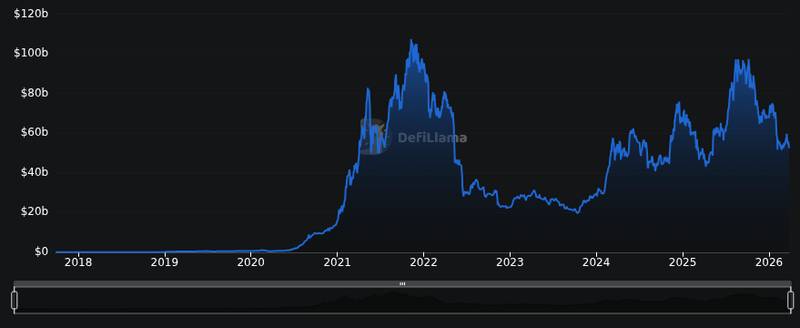
Standard Chartered estimates that stablecoins could drain approximately $500 billion from U.S. bank deposits by end-2028. That projection underpins the banking lobby's fierce opposition to any yield provisions in the bill.
The White House attempted to broker a compromise, proposing that yield be allowed only in limited peer-to-peer contexts, not on idle stablecoin balances. The American Bankers Association formally rejected that compromise on March 5, 2026, effectively resetting negotiations to zero.
The frustration extends beyond the stablecoin yield fight. Advocates focused on other priorities within the bill, such as protections for software developers and clearer token classifications, are watching their legislative window shrink because of a provision they see as tangential to the core market structure framework.
The broader crypto market sentiment reflects this frustration. The Fear & Greed Index has dropped to 13, registering "Extreme Fear," a reading that captures the regulatory uncertainty weighing on the industry.
What Comes Next for US Stablecoin Regulation
A potential breakthrough emerged on March 20, 2026. Senators Thom Tillis (R-NC) and Angela Alsobrooks (D-MD) announced they had reached an "agreement in principle" on the stablecoin yield question.
"Sen. Tillis and I do have an agreement in principle. We've come a long way. And I think what it will do is to allow us to protect innovation, but also gives us the opportunity to prevent widespread deposit flight."
— Senator Angela Alsobrooks (D-MD)
The proposed compromise would bar rewards on passive stablecoin balances, a middle ground designed to address the banking industry's deposit-flight concerns while preserving some form of yield in active DeFi contexts.
Senator Cynthia Lummis (R-WY) expects a Senate Banking Committee hearing on the CLARITY Act in the latter half of April 2026. That hearing will be the next concrete test of whether the Tillis-Alsobrooks agreement holds and whether it can attract the bipartisan support needed for a floor vote.
Prediction markets currently put 59% odds on the CLARITY Act being signed into law in 2026, with $436,500 in volume on that contract. That figure reflects cautious optimism, but not confidence.
Even if the stablecoin yield question is resolved, additional obstacles remain. The bill must still address DeFi treatment, ethics provisions restricting elected officials' crypto profits, and stricter anti-money laundering rules. A separate version that passed the Senate Agriculture Committee also needs reconciliation with the House-passed text.
According to advocates, the hope was for a May 2026 resolution, though that timeline remains unconfirmed. Without a federal stablecoin framework, issuers continue operating under a patchwork of state-level rules, leaving the U.S. market in regulatory limbo while competitors in the EU and Asia move ahead with clearer guidelines.
The late-April Banking Committee hearing is the next date to watch. If the Tillis-Alsobrooks deal survives committee scrutiny, the CLARITY Act could finally move to a Senate floor vote. If it collapses, the crypto industry faces yet another negotiation cycle, and Van Valkenburgh's frustration will only grow louder.
Disclaimer: This article is for informational purposes only and does not constitute financial or investment advice. Cryptocurrency and digital asset markets carry significant risk. Always do your own research before making decisions.