The Bitcoin Fear & Greed Index dropped to 13 on March 27, 2026, extending a streak of Extreme Fear readings that has now lasted more than 46 consecutive days. That makes this the longest unbroken run of Extreme Fear since the aftermath of the FTX collapse in November 2022, and it comes as BTC slides another 3.5% in 24 hours.
TLDR Keypoints
- Current score: 13 out of 100 (Extreme Fear)
- Direction: Up from yesterday's 10, but roughly flat versus last week (11) and last month (11)
- Streak: 46+ consecutive days below 25, the longest Extreme Fear stretch since the post-FTX bear market
What the Fear & Greed Index Is Showing for Bitcoin Right Now
The Crypto Fear & Greed Index reads 13, deep inside the Extreme Fear zone (0 to 24 on its 0-to-100 scale). Yesterday's reading was even lower at 10, while the seven-day and 30-day averages both sit at 11.
Six components feed the score: volatility (25%), market momentum and volume (25%), social media sentiment (15%), investor surveys (15%), Bitcoin dominance (10%), and Google Trends (10%). With BTC down 38.49% over the past 200 days and 22.06% over the past year, the volatility and momentum components are doing the heaviest lifting in dragging the index toward the bottom of the scale.
Bitcoin traded at $68,305 at press time, falling 3.54% in 24 hours after touching a session high of $70,838 and a low of $68,146. Market cap stands at $1.37 trillion with $51.29 billion in 24-hour trading volume.
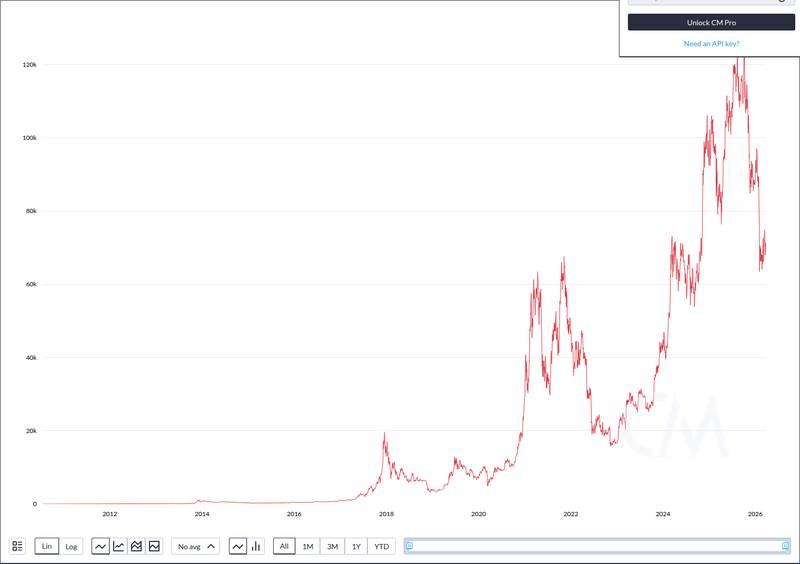
Social media sentiment and Google search interest for Bitcoin-related terms remain subdued, consistent with retail disengagement during prolonged downtrends. The combination of falling prices, declining retail activity, and elevated volatility explains why the index has been pinned below 15 for weeks. The recent wave of Bitcoin ETF inflow volatility has done little to lift broader market mood.
When BTC's Sentiment Hit This Level Before, and What Followed
Extreme Fear readings below 15 are rare. The lowest score ever recorded was 6 during the Terra/Luna collapse in June 2022. The FTX implosion in November 2022 produced a comparable multi-week run of sub-20 scores.
In both cases, buying Bitcoin during those lows proved profitable on a 90-day horizon. Historical data shows that purchases made when the index sits below 15 have delivered a median 90-day return of +38.4%. After the Terra/Luna crash, BTC bottomed near $17,600 and traded above $21,000 within three months. After FTX, the recovery was slower but ultimately led into the 2023 rally.
The current 46-day streak stands out for its duration, not its depth. The score has hovered between 10 and 15 for most of March 2026, suggesting a persistent low-grade fear rather than the sharp panic spikes seen in 2022. That distinction matters: sharp spikes often mark capitulation bottoms, while grinding fear can persist longer than traders expect.

The Fear & Greed Index is a sentiment tool, not a price predictor. But the pattern of extreme readings coinciding with major turning points has made it a closely watched institutional reference point, particularly among contrarian-minded allocators.
One notable divergence in the current cycle: institutional holders appear to be staying firm while retail investors capitulate. That split between institutional conviction and retail panic has widened over the past month, adding a layer of complexity to the usual fear-equals-buying-opportunity thesis.
What to Watch Next for BTC Sentiment
The index updates daily on Alternative.me. With the score at 13, any move back above 25 would break the Extreme Fear streak and could signal a sentiment inflection.
Macro catalysts are the most likely triggers. The next Federal Reserve policy decision and upcoming PCE inflation data will directly affect risk appetite across crypto markets. A dovish surprise could quickly compress volatility, the single largest component of the index at 25% weighting.
On-chain metrics offer another lens. Bitcoin exchange reserves and futures funding rates have historically diverged from the Fear & Greed Index before major reversals. Declining exchange reserves (coins moving to cold storage) paired with deeply negative funding rates would reinforce the contrarian case that accumulation is happening beneath the surface of negative sentiment.
BTC's 200-day drawdown of 38.49% also places the current market in a zone that has historically attracted longer-term capital, even as short-term sentiment remains deeply negative.
Disclaimer: This article is for informational purposes only and does not constitute financial or investment advice. Cryptocurrency and digital asset markets carry significant risk. Always do your own research before making decisions.