



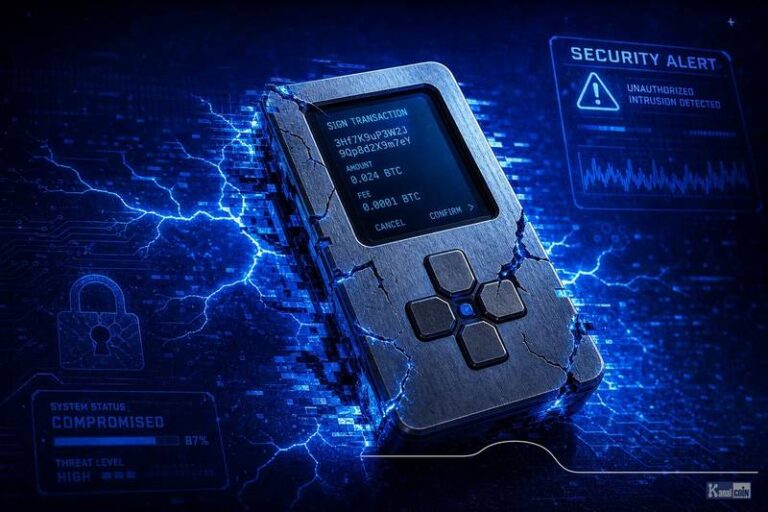
The Coldcard exploit has entered its fifth day, keeping a hardware-wallet security scare in focus as the story remains an active, still-developing situation rather than a fully settled incident.
TLDR KEYPOINTS
- The Coldcard exploit story has now reached its fifth day and continues to develop.
- The core anchor is a Coinkite vendor warning tied to Coldcard seed generation.
- Key details remain unverified, so cautious wording matters while the situation is live.
The reporting is centered on a security warning published by Coinkite, the maker of Coldcard, concerning seed generation on the Coldcard Mk3. That vendor notice is currently the main documented source anchoring the story. For related coverage, see Bybit to Suspend Zircuit (ZRC) Deposits and Withdrawals on August 4, 2026.
At this stage the incident is best treated as an unfolding hardware-wallet security development. The available source base is partial, and figures such as loss totals, victim counts, or the full scope of any exploit have not been independently established in the material at hand. For related coverage, see Bybit schedules UNITREEUSDT perpetual pre-market listing for August 3, 2026.
Readers tracking the timeline can follow prior coverage of how the warning surfaced, including reporting that Coinkite warned Coldcard Mk3 users and later entries as the story was highlighted in an August 2 digest.
Why a Coldcard warning revives self-custody questions
A hardware wallet like Coldcard exists to hold the private keys that control a user’s Bitcoin offline. When the vendor itself flags a problem in how a device generates a seed, the concern reaches the foundation of self-custody.
Seed generation is the process of creating the master secret from which all of a wallet’s keys are derived. If that process draws on weak randomness, the resulting keys can become easier to predict, which is why the entropy behind seed creation is treated as a core security property.
The broader worry is about trust. Reporting has framed the incident as one that shakes faith in self-custody and could push some holders toward regulated products. That does not mean self-custody is broadly unsafe; it means a specific device warning is prompting users to re-examine their setup.
Additional coverage has linked the flaw to on-chain activity and described the hardware-wallet flaw as connected to ongoing movements. Kanalcoin has separately tracked how Coldcard wallet losses were reported alongside a possible additional sweep.
What is still unverified and worth watching
The underlying research for this story is explicitly partial, and confidence in the current picture is low. There is no confirmed fact set, no verified loss statistics, and no settled account of exactly which users are affected.
The research phase was also cut short after its data-gathering budget was exceeded, which means the evidence base here is narrower than a fully reported incident would warrant. That is a reason for caution, not a basis for firm conclusions.
The updates most likely to change the reporting are concrete: further statements from Coinkite, independently confirmed technical findings on the seed-generation issue, and verifiable on-chain evidence tying specific movements to the flaw.
Until those arrive, the responsible read is that a vendor-flagged security concern is active on its fifth day, its full scope is not yet documented, and users should watch for confirmed guidance before drawing conclusions about their own devices.
Disclaimer: This article is for informational purposes only and does not constitute financial or investment advice. Cryptocurrency and digital asset markets carry significant risk. Always do your own research before making decisions.