


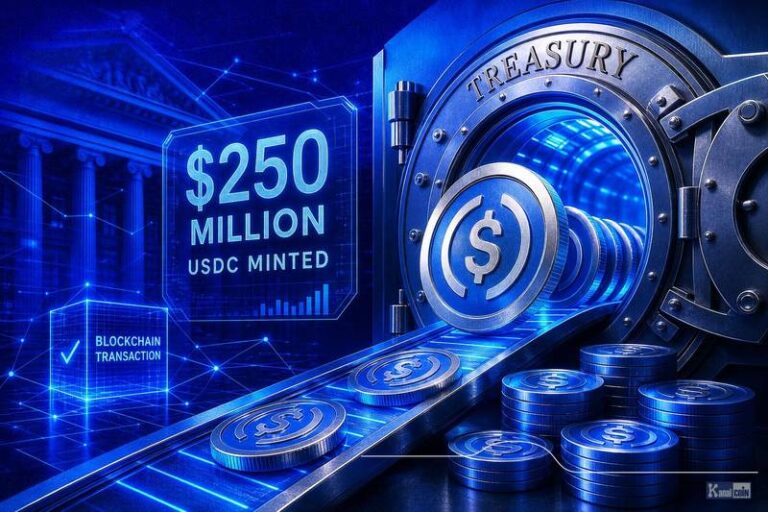
A $250 million USDC mint has been recorded at the USDC Treasury, drawing attention from traders who track stablecoin issuance as a potential liquidity signal for crypto markets.
The USDC Treasury refers to the issuer-side treasury wallet that creates new USD Coin before it enters circulation. A mint at this wallet means fresh supply has been generated, but it does not by itself confirm that the tokens have moved into the open market. For related coverage, see USDC Treasury Mints 250 Million USDC: Why It Matters.
On-chain data tied to the event points to a Solana transaction, flagged in blockchain tracking data. Circle, the issuer behind USDC, operates as a regulated stablecoin firm and has disclosed its business through a registration filing with the U.S. Securities and Exchange Commission.
Minting Is Not the Same as Circulation
A treasury mint and deployed market liquidity are not always the same thing. Newly minted USDC can sit in the treasury wallet before any allocation, so the supply figure alone should not be read as immediate buying power entering exchanges. For related coverage, see World Raises $52.5 Million in WLD Token Sale: What It Means.
This distinction matters because market participants usually wait for follow-up transfers before treating a mint as active demand. A similar pattern was seen when Circle minted 250M USDC on the Solana blockchain, where the issuance step preceded any confirmed movement into trading venues. For related coverage, see Circle Mints 250M USDC on Solana Blockchain.
Why Traders Watch Stablecoin Issuance
Large stablecoin mints are often tracked as potential liquidity signals for crypto markets. USDC supply changes can influence trader sentiment around available buying power and exchange activity, which is why an event like this draws market attention. For related coverage, see Robinhood Chain TVL Surpasses $400 Million Milestone.
The key distinction is between a treasury mint and confirmed exchange inflows. A mint expands the potential supply, but only transfers to exchanges or market makers indicate that liquidity is being positioned for deployment against assets like BTC and ETH.
What to Watch After the Treasury Mint
Post-mint wallet movements often reveal whether newly created stablecoins are being allocated. Transfers from the treasury-linked wallet to exchanges or over-the-counter desks can matter more than the mint itself.
Signs of exchange-related movement or liquidity deployment are the clearest follow-up signals. Treasury wallets are also sensitive infrastructure, as underscored when Triple-A confirmed a treasury wallet breach, making the destination of these funds worth close monitoring.
Readers should avoid overinterpreting one issuance in isolation. Broader mint and redemption trends provide stronger context than a single event, and until on-chain transfers confirm where the supply goes, the mint remains a supply-side data point rather than proof of new market demand.
Disclaimer: This article is for informational purposes only and does not constitute financial or investment advice. Cryptocurrency and digital asset markets carry significant risk. Always do your own research before making decisions.