Bitcoin exchange reserves across major trading venues have continued to decline, reinforcing a defensive market structure where holders are pulling BTC off platforms rather than positioning to sell. The persistent outflow pattern, tracked through on-chain analytics, suggests reduced immediate sell-side pressure.
What Shrinking Exchange Reserves Signal About Holder Conviction
TLDR
- Bitcoin exchange reserves have fallen to multi-year lows as holders withdraw BTC from centralized platforms.
- Sustained net outflows over multiple weeks point to accumulation behavior rather than one-off movements.
- Lower exchange supply reduces the pool of immediately sellable BTC, creating a structurally defensive setup.
Exchange reserves measure the total amount of Bitcoin held in wallets controlled by centralized exchanges. Traders and analysts monitor this metric because it reflects how much BTC is readily available for sale on spot markets.
When reserves decline persistently, it typically indicates that holders are moving coins into self-custody or cold storage, a pattern associated with longer-term holding conviction rather than active trading intent.
Recent data from CryptoQuant's exchange reserve tracker shows that Bitcoin balances on exchanges have trended downward, continuing a pattern that has played out over multiple weeks rather than as a single isolated event.
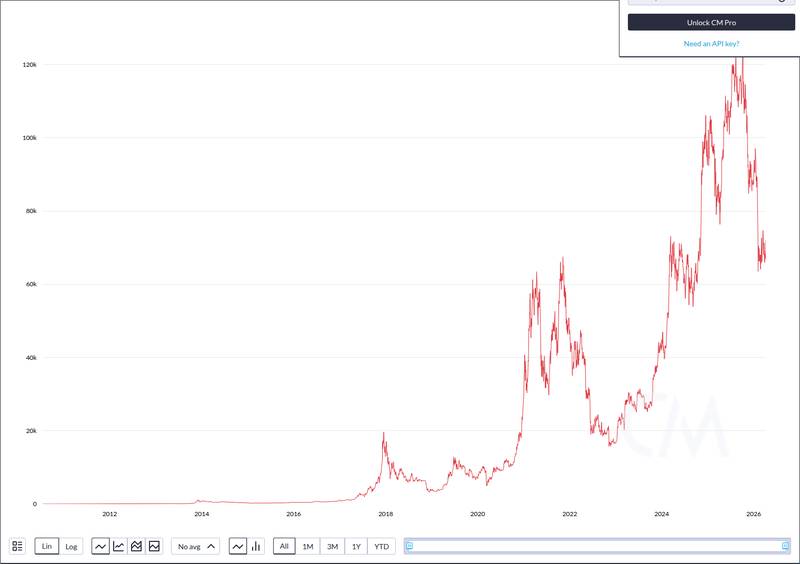
This distinction between one-off withdrawals and persistent multi-week trends matters. A single large withdrawal could reflect a custodial migration or an exchange consolidating wallets internally. Sustained net outflows across many days are harder to explain away as housekeeping.
Reports from The Block have documented this broader trend, noting that Bitcoin exchange reserves have dropped to their lowest levels in years, with CryptoQuant data underpinning the findings. The pattern is consistent with what was observed when solo miners earned block rewards and moved coins directly to personal wallets rather than exchange deposits.
Cross-Exchange Consistency: Broad Signal or Venue-Specific Noise?
Not all exchange reserve declines carry equal weight. If outflows are concentrated on a single platform, the signal may reflect that venue's specific circumstances, such as regulatory pressure, a custody product launch, or regional user behavior, rather than a market-wide trend.
According to Bitget's overview of BTC exchange reserves, the metric is most informative when multiple high-volume exchanges show directionally aligned outflows over the same observation window. When reserves fall broadly across Binance, Coinbase, and other major venues simultaneously, the defensive interpretation gains credibility.
Analysts tracking institutional Bitcoin access through ETF launches have noted that some reserve declines may partially reflect coins moving from exchange custody into ETF-adjacent custodial arrangements, a structural shift rather than pure holder accumulation.
Internal wallet reshuffling remains a persistent source of noise. Exchanges routinely move funds between hot and cold wallets for security purposes, and on-chain labeling services can misclassify these movements as outflows. Comparing net flows across multiple data providers helps filter this distortion.
Where the Defensive Thesis Can Break Down
Low exchange reserves do not guarantee price stability. Derivatives markets can drive sharp downside moves regardless of spot-side supply conditions. Leveraged short positions and funding rate flips can trigger liquidation cascades even when exchange BTC balances are historically low.
Event-driven inflows represent another invalidation scenario. A sudden regulatory crackdown, exchange insolvency scare, or macro shock could push holders to redeposit BTC onto exchanges rapidly, reversing weeks of outflows in days. The pattern observed when miners sold large BTC holdings after extended dormancy illustrates how quickly supply dynamics can shift.
Readers monitoring this setup should watch for: sudden spikes in exchange inflow volume, divergence between spot reserve trends and derivatives open interest, and any single-exchange anomaly that could indicate custodial migration rather than genuine accumulation.
The reserve data supports a defensive reading of Bitcoin's current market structure, but defensive is not the same as bullish. Reduced sell-side liquidity can amplify moves in both directions.
Disclaimer: This article is for informational purposes only and does not constitute financial or investment advice. Cryptocurrency and digital asset markets carry significant risk. Always do your own research before making decisions.