Ethereum's newly launched Ethereum Economic Zone, or EEZ, is a framework designed to make rollups extend Ethereum rather than fragment it. Introduced on March 29, 2026, by Gnosis, Zisk, and the Ethereum Foundation, the EEZ proposes synchronously composable rollups that share liquidity, settle in ETH, and execute cross-chain calls within a single transaction.
What Ethereum's EEZ Actually Is
The official EEZ launch post describes the framework as an L1-to-L2 design where rollups function as extensions of Ethereum mainnet, not independent chains that happen to settle on it. In plain terms, "synchronously composable rollups" means a smart contract on one EEZ rollup can call a contract on Ethereum mainnet or on another EEZ rollup inside a single atomic transaction, with no bridge hop or separate confirmation window.
Gnosis and Zisk are named as founding contributors. The Ethereum Foundation is funding the work, and the organizational home is the EEZ Association, a Switzerland-based entity set up to steward the open-source effort.
ETH remains the gas token, the settlement layer, and the source of truth for all activity within the framework. That design choice is deliberate: the EEZ is not introducing a new token or an alternative fee market. It anchors every rollup back to Ethereum's existing economic gravity.
Welcome to the Ethereum Economic Zone (EEZ), a framework for synchronously composable rollups.
— The Ethereum Economic Zone (@etheconomiczone) March 29, 2026
What does that mean?
One deployment. Shared liquidity. Single transactions across L1 & L2. Identity verified anywhere. Smart wallets connected everywhere. No additional trust… https://t.co/Fuf8G0xwA4 pic.twitter.com/KeMLIisN8S
Source: @etheconomiczone on X
How EEZ Tries to Fix Layer-2 Fragmentation
The problem EEZ is targeting is well documented. Bitcoin.com News reported that Ethereum value is currently siloed across more than 20 disconnected L2 networks, with nearly $40 billion described as fragmented across them. Users bridging tokens between Arbitrum, Optimism, Base, and others face delays, fees, and trust assumptions that make Ethereum feel like a collection of separate chains rather than one network.
The EEZ's core technical claim is atomic cross-chain execution. According to the launch materials, a contract deployed on an EEZ rollup should be able to call a contract on mainnet or on another EEZ rollup within a single transaction. If the entire call chain succeeds, it settles; if any part fails, everything reverts. That model, if it works at scale, would remove the need for conventional bridges between participating rollups.
The launch framing also emphasizes shared liquidity and connected identity. Instead of fragmenting deposits across isolated rollup environments, EEZ rollups would pool into a unified liquidity layer. Wallet identity would carry across chains without separate onboarding steps. For DeFi users, this could mean accessing lending, trading, and yield protocols across rollups without manually moving assets, a pain point that has driven some users toward simpler ETF-based crypto exposure in traditional markets.
However, according to the launch materials, technical specifications and performance benchmarks are still forthcoming. The framework has not yet demonstrated these capabilities at production scale. The claim that bridges become unnecessary remains aspirational until independent testing confirms it.
Why the EEZ Thesis Matters for Ethereum and Southeast Asia
The timing matters because Ethereum's economic position is expanding even as its user experience remains fragmented. Token Terminal noted on March 29, 2026 that Ethereum hosts 61.4% of all tokenized assets, settling roughly $206.2 billion on-chain, with that market cap up more than 40% year over year.
Ethereum also leads DeFi by total value locked, holding approximately $107.67 billion across its protocols.
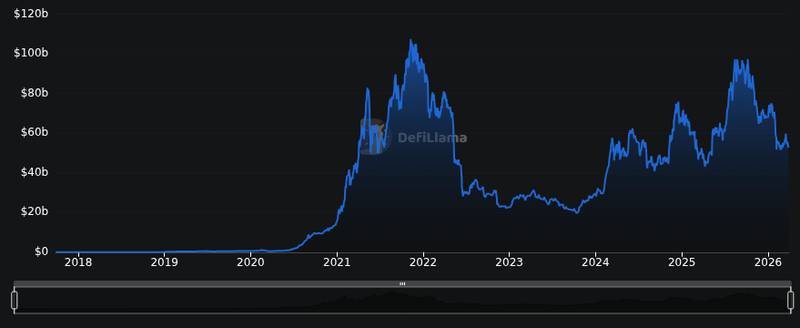
That dominance creates a specific problem for Southeast Asian builders and users. Exchanges in Thailand, Indonesia, and the Philippines increasingly list Ethereum-based tokens and stablecoins, but fragmentation across L2s complicates withdrawals, settlement, and cross-border remittance flows. A unified Ethereum stack would simplify the infrastructure layer for regional platforms that currently need to support multiple rollup bridges, each with its own risk profile.
Southeast Asia's stablecoin-heavy crypto usage, driven by remittance corridors and merchant payments, runs primarily on Ethereum-settled assets. If EEZ rollups deliver on shared liquidity and atomic execution, regional exchanges and payment providers could route transactions across L2s without maintaining separate bridge integrations. The region has also seen growing institutional interest in tokenized assets and fan tokens built on Ethereum infrastructure, making a less fragmented base layer directly relevant to local builders.
ETH traded at $2,057.56 at press time, down 0.72% over the prior 24 hours, with a market cap near $247.4 billion.
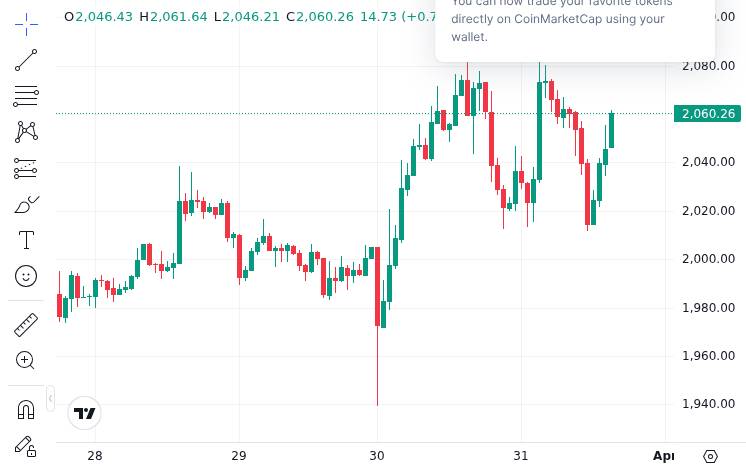
The honest read on EEZ right now is that it is a design direction, not a proven fix. No benchmarks have been published. No independent audits of the synchronous composability mechanism are available yet. The framework's success depends on whether rollup teams choose to adopt it and whether the atomic execution model holds under real transaction loads. In a market where macro shocks can still override technical narratives, the gap between launch announcement and production deployment is where most frameworks quietly stall.
What EEZ does signal is that Ethereum's core contributors recognize fragmentation as an existential usability problem. Whether the solution arrives through EEZ or a competing standard, the push to rebuild "one Ethereum" reflects a network trying to unify its economic zone before that value migrates elsewhere.
Disclaimer: This article is for informational purposes only and does not constitute financial or investment advice. Cryptocurrency and digital asset markets carry significant risk. Always do your own research before making decisions.