Between 15% and 20% of the global Bitcoin mining fleet is now operating at a loss, according to a new CoinShares report, as the post-halving squeeze on margins pushes high-cost operators toward capitulation.
The CoinShares Q1 2026 Bitcoin Mining Report finds that any miner running hardware below an Antminer S19 XP with electricity costs at or above $0.06/kWh is losing money at the current hash price of roughly $28 to $30 per PH/s/day. That hash price represents an all-time post-halving low, down from $35 to $40 in Q4 2025.
Bitcoin traded at $66,898 at press time, sitting roughly 47% below its October 2025 all-time high of $126,080. The Fear & Greed Index registered 12 out of 100, deep in "Extreme Fear" territory.
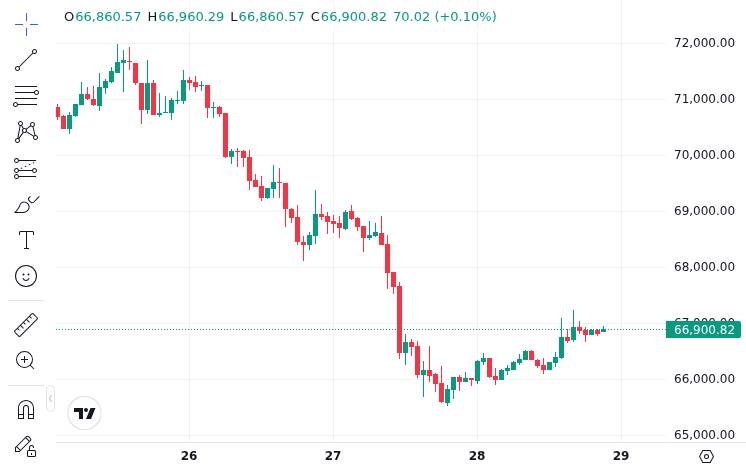
CoinShares Report: One in Five Bitcoin Miners Is Now Losing Money
The April 2024 halving cut Bitcoin's block reward from 6.25 BTC to 3.125 BTC, slashing per-block mining revenue in half overnight. For miners already running on thin margins, that single event rewrote the economics of the entire industry.
The weighted average all-in production cost for publicly listed miners hit approximately $79,995 to $88,000 per BTC in Q4 2025. With Bitcoin trading well below that range, the math is stark: miners are collectively spending more to produce each coin than it is worth on the open market.
"Unprofitable" in this context means total revenue, including transaction fees, falls short of all-in sustaining costs covering electricity, hardware depreciation, facility overhead, and debt service. When hash price drops below a miner's break-even threshold, every block mined deepens the loss.
Why the Halving Made Mining Economics This Difficult
The halving is a programmatic event baked into Bitcoin's code. When the block reward halved in April 2024, miners' primary revenue stream was cut by 50%, while their fixed costs, energy contracts, hardware leases, and facility rent, remained unchanged.
Not all miners are equally exposed. The key differentiators are hardware efficiency and electricity price. A miner running next-generation ASICs like the Antminer S21 series at low-cost power can still turn a profit. A miner running legacy S19 or S17 hardware at $0.06/kWh or above cannot.
Individual miner cost structures vary dramatically. CoinShares data for Q4 2025 shows all-in production costs of $153,040 per BTC for Marathon Digital, $160,402 for Hut 8, $168,693 for Core Scientific, and $118,932 for CleanSpark. Every one of these figures sits far above the current spot price, though these all-in costs include non-cash items like depreciation and stock-based compensation that do not represent immediate cash outflows.
Recent U.S. Bitcoin spot ETF outflows have added further downward pressure on price, compounding the margin squeeze for miners who need higher BTC prices to break even.
What Miner Capitulation Could Mean for Bitcoin's Network and Price
The network is already showing signs of stress. Bitcoin mining difficulty dropped 7.76% on March 20, 2026, at block 941,472, marking the second-biggest downward adjustment of 2026. Network hashrate retreated to approximately 942.83 EH/s.
More striking: early 2026 has seen three consecutive negative difficulty adjustments, the first such streak since July 2022. That pattern is a structural signal that miners are shutting down machines and leaving the network.
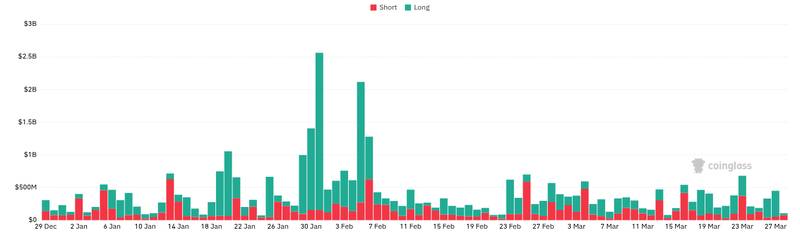
In the near term, miner capitulation creates forced selling pressure. Unprofitable operators must liquidate BTC holdings to cover operational costs, adding sell-side volume to an already anxious market where the Fear & Greed Index sits at just 12 out of 100.
Bitcoin's difficulty adjustment mechanism is the self-correcting force here. As unprofitable miners exit, difficulty drops, reducing the computational cost of mining for those who remain. This pattern played out after both the 2016 and 2020 halvings: a capitulation phase, followed by difficulty resets, followed eventually by price recovery as supply-side pressure eased.
James Butterfill, Head of Research at CoinShares, offered a cautious outlook on the path ahead.
"If prices were to stay below US$80k for the remainder of the year, we forecast the hashprice to continue to fall."
James Butterfill, Head of Research, CoinShares
The implication is clear: without a meaningful BTC price recovery, the current shakeout will deepen. The question surrounding Bitcoin's long-term infrastructure security adds another layer of complexity to the mining landscape.
The Survivors: Who Stays Profitable When 20% Drop Out
The shakeout creates a structural advantage for low-cost, large-scale operators. Miners with access to cheap power, modern ASIC fleets, and diversified revenue streams are positioned to absorb hashrate share as weaker competitors exit.
Hardware efficiency is the clearest dividing line. Next-generation machines like Bitmain's S21 series deliver substantially more hashes per watt than legacy S19 or S17 units. Miners who invested in fleet upgrades before the halving are better positioned; those who delayed now face a double bind of falling revenue and depreciating hardware.
One of the most significant structural shifts in the report: public Bitcoin miners have announced more than $70 billion in cumulative AI and high-performance computing contracts. CoinShares estimates that listed miners could derive up to 70% of their revenue from AI workloads by year-end 2026, effectively transforming from pure-play Bitcoin miners into diversified data center operators.
This pivot reflects the economics of existing infrastructure. Miners who already own power capacity and cooling systems can repurpose facilities for higher-margin AI workloads, creating a revenue floor that pure mining operations lack. These dynamics echo the broader structural pressures reshaping crypto infrastructure across the industry.
The historical pattern suggests consolidation is the outcome: weaker operators shut down or get acquired, survivors gain hashrate share at lower difficulty, and the network stabilizes at a new equilibrium. For now, the 15% to 20% of the fleet operating at a loss face a stark choice: find cheaper power, upgrade hardware, pivot to AI, or shut down.
Disclaimer: This article is for informational purposes only and does not constitute financial or investment advice. Cryptocurrency and digital asset markets carry significant risk. Always do your own research before making decisions.